 Pin it
 I stumbled onto this bowl during a particularly humid afternoon when the thought of turning on the stove felt unbearable, yet my body was screaming for something substantial and alive. A friend had left a can of coconut milk on my counter weeks prior, and suddenly it felt like the missing puzzle piece to transform plain quinoa into something that tasted like a small escape. The first spoonful hit different—creamy, nutty, bright with lime—and I realized I'd accidentally created my new favorite lunch without any real plan.
I made this for my sister when she was going through her wellness phase, skeptical as always that plant-based food could actually taste good. Watching her dip the spoon into that peanut dressing and then pause mid-chew, eyes widening slightly, felt like a small victory—not because I'd proved her wrong, but because we'd shared something unexpectedly delicious together.
Ingredients
- Quinoa, rinsed: This grain cooks up fluffy and neutral, the perfect canvas for coconut milk to work its magic without overpowering.
- Coconut milk, full-fat or light: Full-fat creates a richer, creamier texture that makes you forget this is technically a grain bowl and not dessert.
- Water: Balances the coconut intensity so the quinoa stays tender, not gluey.
- Salt: Just enough to wake up every flavor without announcing itself.
- Red bell pepper, thinly sliced: It stays crisp when raw, adding sweetness and that satisfying crunch that makes you want another bite.
- Carrot, julienned or shredded: The thinner you cut it, the more it releases its natural sweetness—trust the mandoline if you have one.
- Cucumber, thinly sliced: Acts like a cool palate cleanser between bites, essential for balance.
- Purple cabbage, shredded: Slightly peppery and gorgeous, it holds its crunch even after sitting with dressing for a while.
- Edamame, cooked and shelled: Adds plant-based protein and a pop of tender texture that makes this feel more like a meal than a side.
- Fresh cilantro, chopped: The entire personality of the bowl lives in this herb—don't skip it or your bowl will taste incomplete.
- Sesame seeds: Toasted or raw, they add nuttiness and that final flourish that makes everything feel intentional.
- Creamy peanut butter: The foundation of magic, binding sweet, salty, and acidic into something that tastes like it shouldn't work but absolutely does.
- Soy sauce, gluten-free if needed: Umami depth that grounds the entire dressing and keeps it from tasting one-dimensional.
- Rice vinegar: Adds brightness without the sharpness of white vinegar, letting other flavors shine.
- Lime juice, fresh: Bottled never tastes quite right—squeeze it yourself and notice the difference immediately.
- Maple syrup or honey: A touch of sweetness that balances the salt and heat, creating dressing harmony.
- Toasted sesame oil: A small amount goes far, adding nutty depth that elevates this from simple peanut sauce to something Thai restaurant-quality.
- Warm water: Added gradually to thin the dressing to the perfect drizzle consistency without diluting the flavor.
Tired of Takeout? 🥡
Get 10 meals you can make faster than delivery arrives. Seriously.
One email. No spam. Unsubscribe anytime.
Instructions
- Toast and rinse your quinoa:
- Run it under cold water for a minute, swishing with your fingers to remove the bitter coating—you'll taste the difference in how clean and bright the final grain tastes.
- Build the coconut quinoa base:
- Combine your rinsed quinoa, coconut milk, water, and salt in a medium saucepan and bring to a boil, watching it bubble and steam up the kitchen with that warm, inviting coconut smell. Lower the heat to a gentle simmer, cover, and let it do its thing for 15 minutes until all the liquid absorbs into those tiny grains, then let it rest covered for 5 minutes before fluffing with a fork—patience here creates fluffy, separate grains instead of mushy clumps.
- Prep your vegetables while the quinoa cooks:
- Slice your bell pepper into thin, even pieces, julienne or shred the carrot, slice the cucumber and cabbage, and make sure your edamame is cooked and cooled—this is where you'll appreciate good knife skills and a sharp blade. Mise en place is your friend here; having everything ready means assembly becomes meditative rather than frantic.
- Whisk your dressing into silky perfection:
- In a small bowl, combine the peanut butter, soy sauce, rice vinegar, lime juice, maple syrup, and sesame oil, whisking until the peanut butter starts to break down and everything begins combining. Add warm water a tablespoon at a time, whisking between each addition, until the dressing flows like a thick honey—you want it to coat the back of a spoon but still drip when poured.
- Assemble with intention:
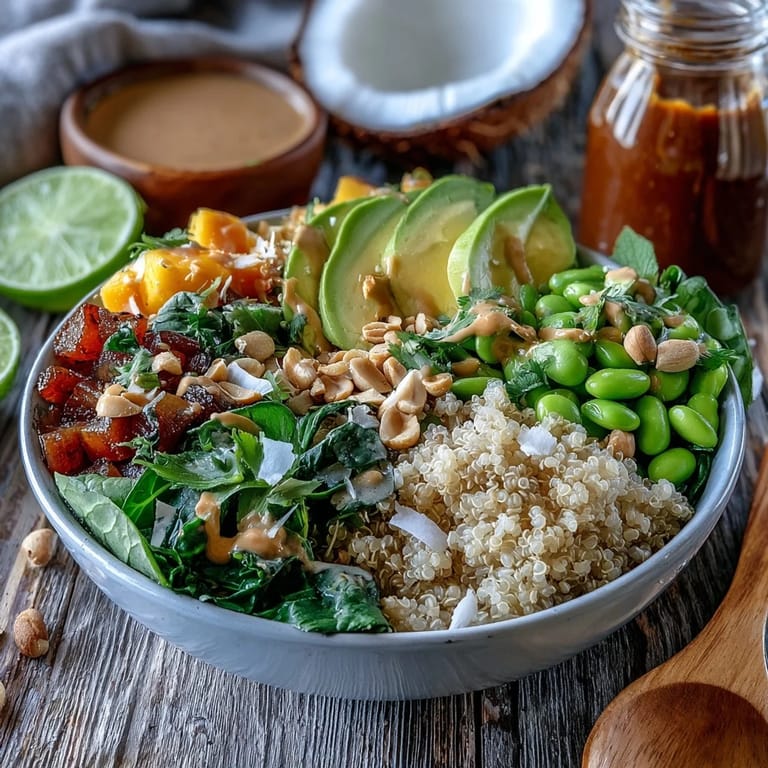
- Divide the fluffy coconut quinoa among your bowls, creating an even base that still has a little mound to it, then arrange your vegetables and edamame on top in whatever pattern feels right to you. This is where your bowl goes from functional to gorgeous, so take a breath and make it look like something you'd want to photograph.
- Dress and garnish:
- Drizzle that peanut dressing generously over everything—don't be shy, as it's where all the flavor lives. Finish with a scatter of fresh cilantro and sesame seeds, letting those final touches signal that this bowl is complete and ready.
- Serve fresh or chill:
- Eat immediately while the coconut quinoa is still warm and the vegetables are at their crispest, or cover and refrigerate for a cold, refreshing version that tastes like summer.
 Pin it
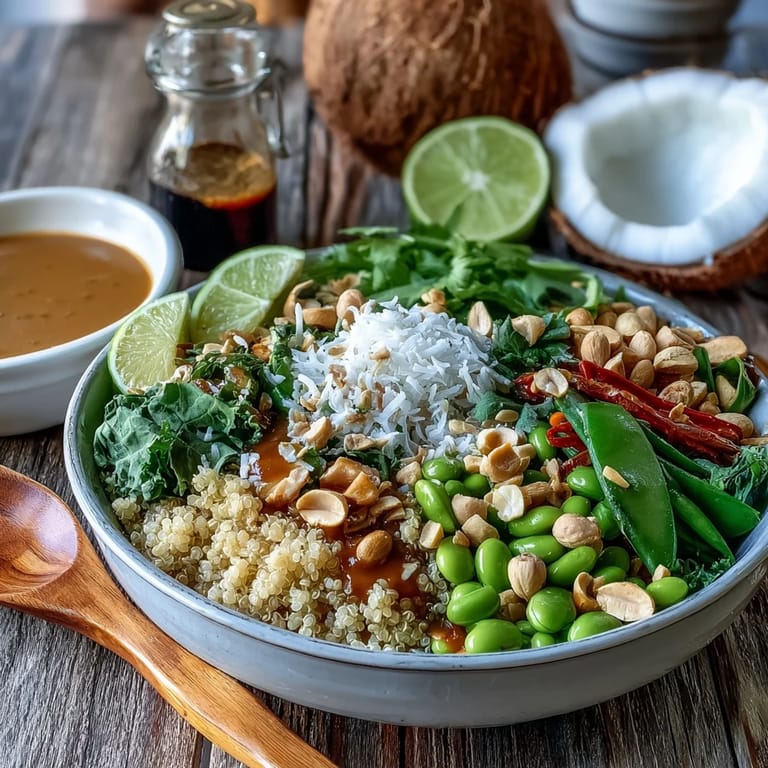
 There's something quietly powerful about handing someone a bowl this colorful and nourishing, watching them dig in without hesitation. It's when food stops being about obligation and becomes about connection, a simple bowl somehow becoming the thing that turns a regular Tuesday into something memorable.
The Magic of Coconut and Peanut
The moment coconut milk hit that hot quinoa, I understood why Thai cuisine feels so complete—coconut isn't just a flavor, it's a richness that makes humble grains feel luxurious. The peanut dressing deepens this even further, creating a sauce that's simultaneously creamy, zesty, and complex enough that you'll catch yourself drinking the bottom of the bowl when no one's looking. This pairing is what separates this bowl from the hundred other grain bowls you've probably made, turning something wholesome into something crave-worthy.
Vegetable Strategy
The vegetables here aren't just toppings—they're the textural contrast that makes every bite interesting, the cool counterpoint to the warm, creamy coconut base. I learned to vary my cuts; the thinly sliced bell pepper and cucumber feel delicate, while the shredded carrot and cabbage add structure and substance. This mix of cutting styles, which I discovered somewhat accidentally while rushing through prep one evening, is what keeps your palate engaged and prevents the bowl from feeling monotonous.
Customization Without Guilt
The beauty of a bowl like this is that it welcomes your input—swap your vegetables for whatever's in season, add grilled tofu or tempeh for extra protein without changing the essence of what makes this dish work. I've made it with seasonal squash in autumn, added roasted peanuts for crunch in winter, and even threw in some leftover roasted broccoli once when my vegetable drawer was running low. The structure is solid enough that variations feel intentional rather than like you're just making it up as you go.
- For a vegan dressing, swap honey for maple syrup and you've changed nothing about the flavor profile.
- Grilled tofu or tempeh adds substance without competing with the coconut and peanut flavors.
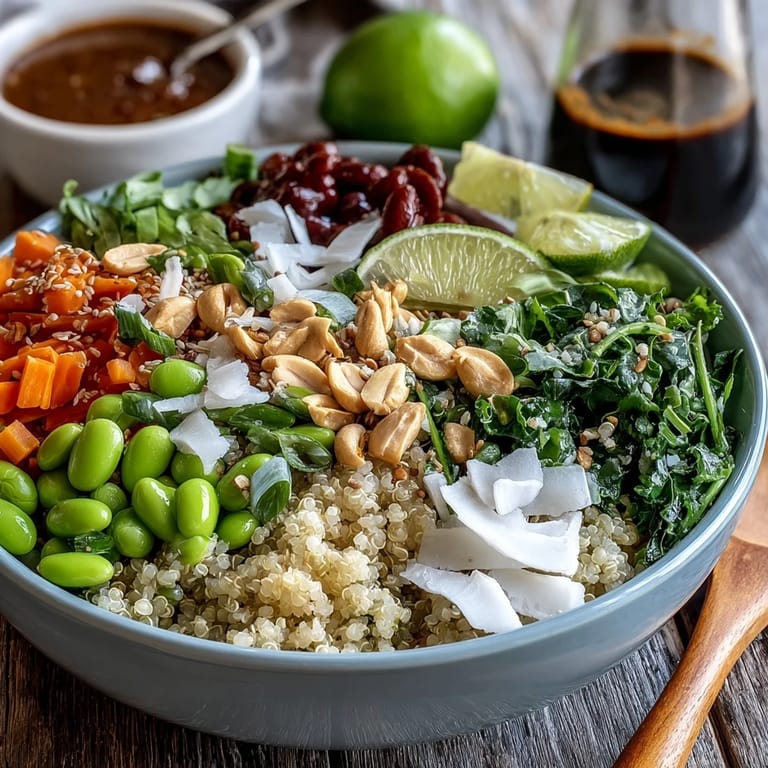
- Roasted peanuts sprinkled on top add another layer of nuttiness that transforms the whole bowl.
 Pin it
 This bowl has become my answer to the question of what to cook when you want something that tastes indulgent but feels nourishing, all without spending an evening in the kitchen. It's the kind of dish that reminds you why cooking for yourself or others matters—it fills more than just your stomach.
Recipe FAQs
- → Is this dish gluten-free?
Yes, use gluten-free soy sauce or tamami in the peanut dressing to make it completely gluten-free while maintaining all the authentic flavors.
- → Can I make this ahead?
Absolutely. Store cooked quinoa, chopped vegetables, and dressing separately in airtight containers for up to 4 days. Assemble just before serving.
- → What protein additions work well?
Grilled tofu, tempeh, or baked teriyaki chicken complement the Thai flavors beautifully. You can also double the edamame for plant-based protein.
- → How do I store leftovers?
Keep components separate in the refrigerator. The quinoa stays fresh for 5 days, vegetables 3-4 days, and dressing up to a week when properly stored.
- → Can I use other grains?
Brown rice, jasmine rice, or even cauliflower rice work as substitutions. Adjust cooking liquid and time according to grain package directions.
- → Is the peanut dressing essential?
The dressing ties everything together, but you could substitute with tahini sauce, cashew cream, or store-bought Thai peanut sauce in a pinch.