 Pin it
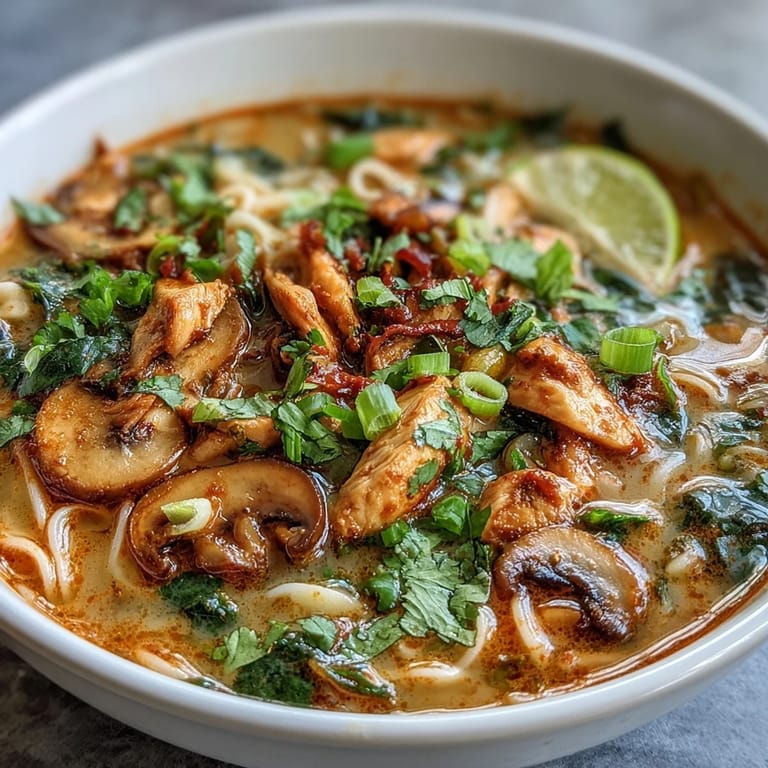
 There's something about the smell of curry paste hitting hot oil that instantly transports me to a tiny Bangkok street stall where I watched a vendor work magic with a single pot. That moment stuck with me, and now whenever I make this coconut curry soup, I'm chasing that same alchemy—turning humble ingredients into something warm, layered, and deeply satisfying. This bowl has saved countless rushed weeknights and impressed people I wanted to impress without breaking a sweat. It's the kind of dish that tastes like you've been cooking all day, even though you haven't.
I made this for my sister during her first week in a new city, when she was feeling overwhelmed and homesick. Watching her face soften as she tasted it, seeing her shoulders relax—that's when I realized good food isn't just nourishment, it's a hug you can serve in a bowl. She's requested it every time she visits now, and honestly, I think she comes home just for this soup.
Ingredients
- Boneless, skinless chicken breast or thighs (400 g): Thighs stay juicier during cooking, but breasts work beautifully if you slice them thin and don't overcook them.
- Mushrooms (200 g), sliced: Shiitake brings an earthy depth that button mushrooms can't quite match, though both work; slice them thick enough to hold their texture through simmering.
- Carrots (2 medium), julienned: The thin cuts let them soften gently without turning mushy; I learned this after one batch of chunky carrot regret.
- Red bell pepper (1 small), thinly sliced: Adds sweetness and visual brightness; thinness matters so it cooks evenly with everything else.
- Baby spinach or bok choy (100 g, optional): Spinach wilts almost instantly at the end, adding freshness without fussiness; bok choy gives you more texture if you prefer.
- Spring onions (2), thinly sliced: Save these for garnish to keep their bite and color alive.
- Fresh ginger (1 tablespoon), grated: This is your foundation—peel it first, then grate it; the fresher it is, the more it sings in the broth.
- Garlic (3 cloves), minced: Don't skip mincing fine; chunky pieces take too long to soften and can taste harsh.
- Lemongrass (2 stalks, optional but worth it): Bruise it by whacking it with the side of your knife so the oils release; it fills your kitchen with an intoxicating smell.
- Kaffir lime leaves (4, optional): If you can find them, they add a floral complexity that's hard to replicate; if not, extra lime juice does the job.
- Red curry paste (2 tablespoons): This is where spice and flavor live; adjust based on your heat tolerance and the brand (some are spicier than others).
- Coconut milk (800 ml): Full fat creates silkiness, light milk makes it lighter; both are valid depending on your mood.
- Chicken broth (500 ml): Good quality broth matters here since it's a main player in the base; homemade is lovely, but a clean store-bought one works perfectly.
- Fish sauce (1 tablespoon): I know it smells funky straight from the bottle, but it's the secret umami bomb that makes everything taste mysteriously delicious; don't skip it if you can.
- Brown sugar (1 tablespoon): A tiny bit of sweetness balances the heat and spice; it's subtle but important.
- Lime juice (1 lime): Freshly squeezed is non-negotiable; bottled lime juice just doesn't sing the same way.
- Fresh cilantro and fresh red chili for garnish: These finish the soup with color and personality; cilantro adds herbaceous freshness, and chili gives you control over your heat level at the table.
Tired of Takeout? 🥡
Get 10 meals you can make faster than delivery arrives. Seriously.
One email. No spam. Unsubscribe anytime.
Instructions
- Get everything prepped first:
- Slice your chicken, chop your vegetables, mince your aromatics, and measure your liquids before you turn on the heat. This matters because curry soup moves fast once it starts, and you don't want to be scrambling.
- Wake up the aromatics:
- Heat your pot over medium, add a splash of oil, then add ginger, garlic, and lemongrass, letting them toast for about a minute until the smell makes you stop what you're doing. This bloom is crucial—it transforms raw flavors into warm, roasted ones.
- Deepen the curry flavor:
- Stir in your red curry paste and cook it alongside the aromatics for another minute; you're essentially blooming it too, which pulls out all its complexity and mellows any harshness.
- Cook the chicken:
- Add your sliced chicken and stir it constantly for 2 to 3 minutes, coating each piece in the curry mixture. The chicken will look pale and slightly cooked on the outside, but that's okay—it finishes cooking in the broth.
- Build the broth:
- Pour in your coconut milk and chicken broth slowly, stirring to dissolve any curry paste that's sticking to the bottom of the pot. Add kaffir lime leaves here if you're using them.
- Add your vegetables:
- Toss in carrots, mushrooms, and red bell pepper now, stirring gently to distribute them evenly. They'll cook at slightly different rates, but that's part of the beauty—varied textures in every spoonful.
- Simmer and taste:
- Bring everything to a gentle simmer (not a rolling boil) and let it bubble softly for 10 to 12 minutes until the chicken is completely cooked through and vegetables are tender. Taste the broth as it cooks—this is where you're adjusting and learning the soup.
- Season it right:
- Stir in fish sauce, brown sugar, and lime juice, then taste again; these three ingredients bring the soup into focus, brightening it and adding depth all at once. You might want more lime or less fish sauce—trust your palate.
- Add greens if using:
- If you're adding spinach or bok choy, drop it in and let it wilt for 1 to 2 minutes; any longer and it becomes dishwater-gray.
- Clean it up and serve:
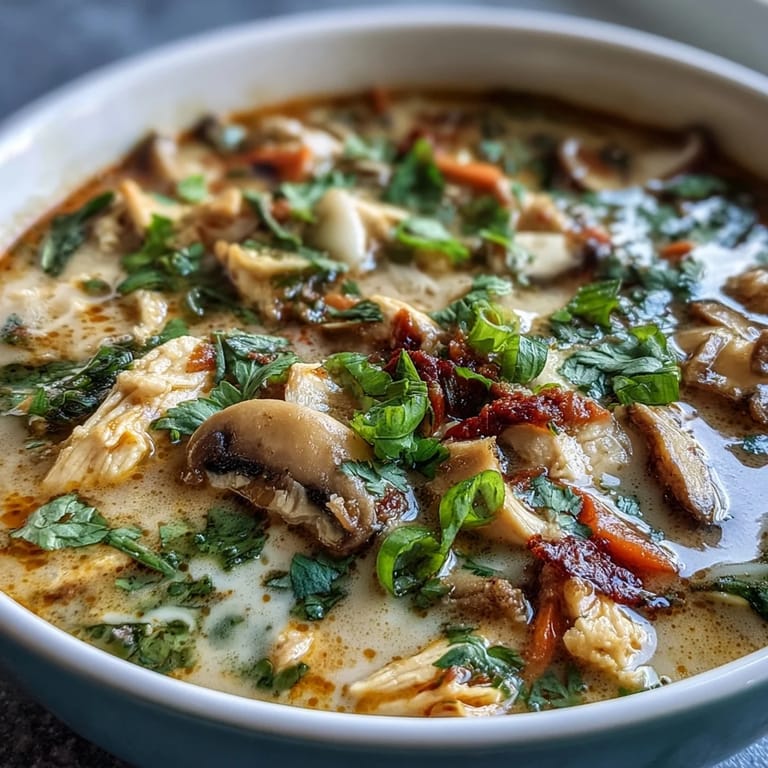
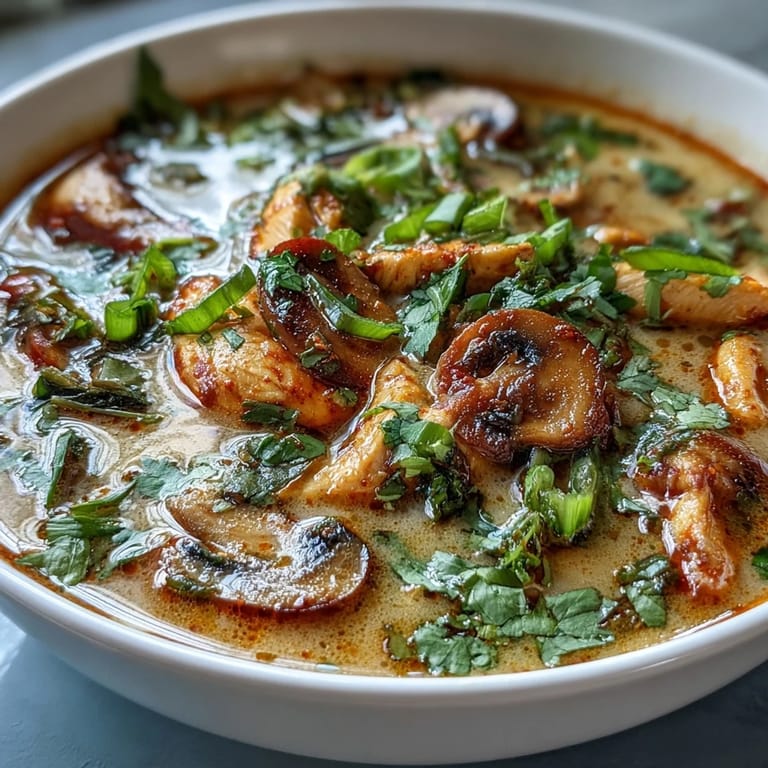
- Fish out the lemongrass stalks and kaffir lime leaves, ladle the soup into bowls, and finish with a shower of spring onions, cilantro, fresh chili, and a lime wedge on the side.
 Pin it
 There was a moment, maybe three bowls in, when my dinner guest asked for the recipe and then said, "This tastes like someone who knows how to cook made it." I laughed because I was still learning, still figuring things out—but that's exactly what these soups teach you. They're patient, forgiving, and generous with their lessons.
Playing With Heat and Spice
The thing about curry soup is that it's endlessly tunable to your comfort level. Start with less curry paste than you think you need, taste the broth after simmering, and add more if you want to go hotter. I've made batches where I went wild with the paste and had to dilute it with extra broth, and versions that were so mild they barely registered as curry. The beauty is you're in control—there's no failure here, just learning what your palate likes.
Stretching It Further
One of my favorite tricks is serving this over jasmine rice or rice noodles to turn it from a soup into something more substantial. A friend brought rice noodles to my place once and added them to her bowl mid-way through, and it completely changed the texture and made it feel like a meal in itself. You can also swap the chicken for shrimp if you're in the mood, though you'll want to add it later so it doesn't overcook, or use tofu for something plant-based that absorbs all these beautiful flavors. It's one of those soups that's happy to collaborate.
Wine Pairing and Finishing Touches
If you're thinking about wine, reach for something crisp and aromatic like a Riesling or Gewürztraminer—the sweetness and minerality complement the spice without fighting it, and the acidity cuts through the richness of the coconut beautifully. The cilantro, lime, and fresh chili at the end aren't just garnish; they're your chance to personalize each bowl and add brightness right before you eat. Don't rush this final step—it's where the soup goes from good to memorable.
- Have lime wedges ready at the table so everyone can squeeze fresh juice into their bowl.
- If you can't find kaffir lime leaves, a extra half lime's worth of juice mixed into the broth works in a pinch.
- Make extra and freeze it in portions for busy weeks when you need comfort food that's already halfway done.
 Pin it
 This soup reminds me why I cook—because it brings people together, tastes like you care, and somehow manages to be both simple and impressive at the same time. Make it once and it becomes yours, something you'll return to again and again.
Recipe FAQs
- → Can I make this soup vegetarian?
Yes, simply replace the chicken with tofu or extra vegetables, swap chicken broth for vegetable broth, and use soy sauce or tamari instead of fish sauce.
- → How spicy is this curry soup?
The spice level is adjustable. Start with 2 tablespoons of red curry paste for moderate heat, or reduce to 1 tablespoon for milder flavor. You can always add more paste while simmering.
- → Can I freeze this soup?
This soup freezes well for up to 3 months. However, coconut milk may separate slightly when reheated—simply whisk gently while warming to restore creaminess.
- → What rice pairs best with this soup?
Jasmine rice is the traditional choice, but basmati or coconut rice work beautifully too. For a lighter option, serve with rice noodles or enjoy it as a standalone meal.
- → Can I use green curry paste instead?
Absolutely. Green curry paste will give you a slightly different flavor profile with more herbal notes from fresh chilies, coriander, and basil. The cooking method remains the same.