 Pin it
 My friend Sarah brought back a street food obsession from Bangkok, and one humid afternoon she reconstructed it in my tiny kitchen while we caught up over iced tea. The aroma that filled the space—coconut milk simmering with ginger and garlic—felt like a miniature vacation. What struck me most was how simple the components were, yet they created something unexpectedly complex on the palate. She handed me a spoonful of that coconut rice and I understood immediately why she couldn't stop talking about it for weeks.
I made this for my parents on a Sunday when they were skeptical about anything outside their usual dinner rotation. My mom took one bite and asked if the basil was what made it taste so alive, and that single question made me realize this dish teaches you to taste individually rather than expect everything to blend into one sauce. My dad, who never asks for seconds, cleared his bowl and got up for more without saying anything—which from him is the highest compliment.
Ingredients
- Jasmine rice: Rinsing it removes excess starch so each grain stays separate and doesn't turn mushy when the coconut milk hits it.
- Coconut milk (full-fat): This is non-negotiable—the lighter versions won't give you that creamy richness or the flavor depth you need here.
- Boneless, skinless chicken thighs or breasts: Thighs stay juicier and more forgiving, but breasts work if you're careful not to overcook them past that 6-7 minute window.
- Fish sauce: I know it smells intense straight from the bottle, but it's the secret that makes everything taste authentically Thai rather than just vaguely Asian.
- Fresh ginger and garlic: Minced fresh versions release their aromatics much faster than anything pre-jarred, so you'll notice the difference in the first minute of cooking.
- Thai basil: It has a slight licorice note that regular basil can't replicate, though regular basil works in a pinch if that's all you have.
- Sugar snap peas and carrot: The blanch-and-chill method keeps them snappy instead of turning them into tired cooked vegetables.
- Roasted peanuts: The crunch is textural insurance—don't skip it or use raw peanuts, as the toasting matters.
Tired of Takeout? 🥡
Get 10 meals you can make faster than delivery arrives. Seriously.
One email. No spam. Unsubscribe anytime.
Instructions
- Get your rice started first:
- Combine rinsed jasmine rice, coconut milk, water, and salt in a saucepan and bring it to a boil—you'll smell the coconut almost immediately and know something good is happening. Once it's boiling, drop the heat to low, cover with a lid, and let it sit undisturbed for 15 to 18 minutes until the liquid is completely absorbed and the rice is tender.
- Wake up the aromatics:
- Heat oil in your skillet or wok over medium-high heat and add the minced garlic and ginger, stirring constantly for about a minute until your kitchen fills with that sharp, fragrant warmth. This step is short but crucial—you're not cooking the garlic to brown it, just to release its volatile oils into the oil itself.
- Cook the chicken through:
- Add your bite-sized chicken pieces to the aromatic oil and stir frequently for 6 to 7 minutes, watching for that golden color on the outside and the flesh turning opaque all the way through. The pieces will firm up slightly, which is exactly what you want.
- Build the sauce in the pan:
- Pour in the fish sauce, soy sauce, brown sugar, white pepper, and lime juice, stirring constantly so everything coats the chicken evenly in that glossy, slightly sweet-salty-umami glaze. Taste a piece before you finish—adjust the lime juice or fish sauce to your preference because these two ingredients are your final flavor controllers.
- Blanch your vegetables briefly:
- Boil a pot of salted water and drop in the sugar snap peas and julienned carrots for exactly one minute, then drain and immediately plunge them into cold water or an ice bath to stop the cooking and preserve their crispness. The carrot will still have a slight resistance when you bite it, which is the goal.
- Assemble with intention:
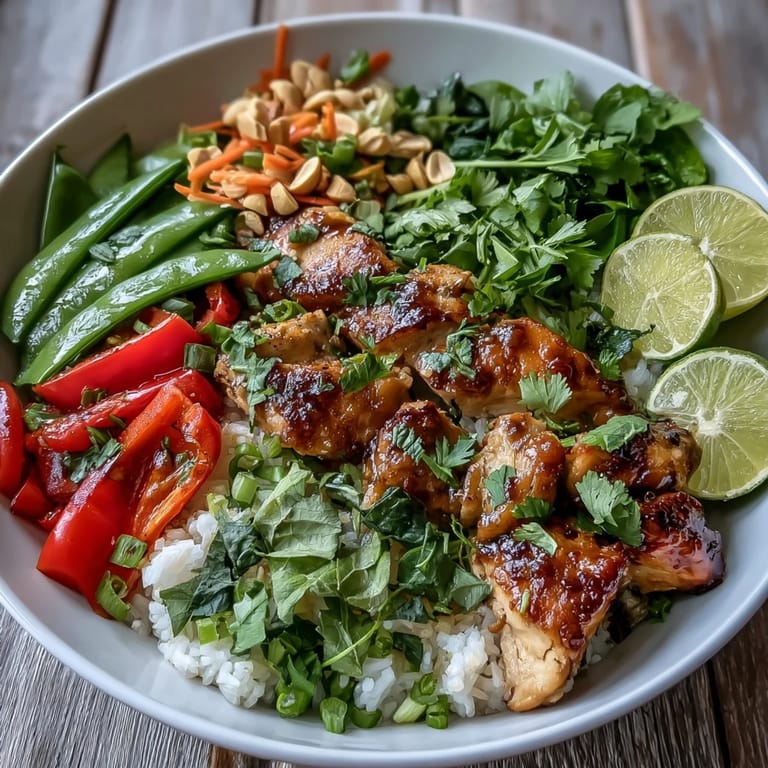
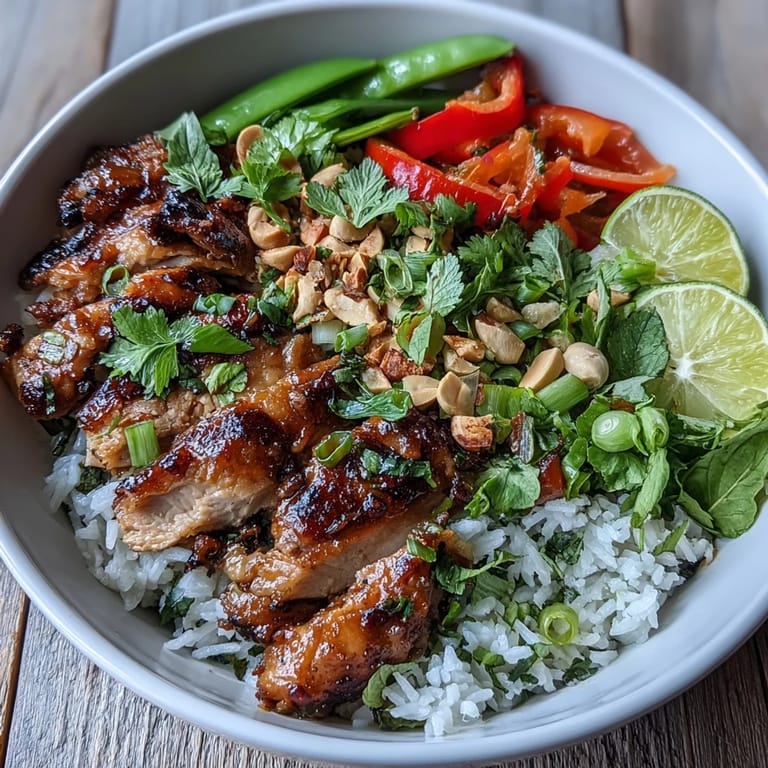
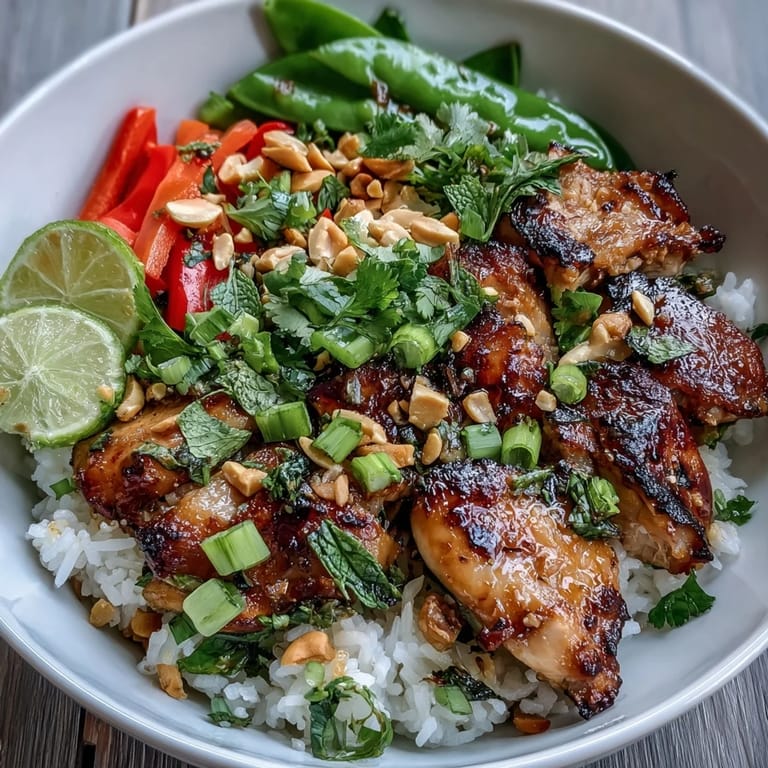
- Divide the fluffy coconut rice among four bowls, then arrange the cooked chicken on top, followed by the blanched vegetables and the raw red bell pepper slices. The visual contrast between the different textures and colors actually matters because eating with your eyes first makes the whole experience better.
- Finish with the herbaceous layer:
- Scatter cilantro, torn Thai basil, sliced green onion, and thin chili slices across the top of each bowl, then crown everything with those chopped roasted peanuts and a lime wedge on the side. The herbs should look generous and vibrant—this isn't the time to be shy.
 Pin it
 There's a moment about halfway through eating this where all the components finally coalesce—the warm rice mingles with the cool-to-room-temperature vegetables, the herbs release their oils from the warmth of the chicken, and suddenly you're not just eating lunch anymore. That's when you understand why Sarah kept making it over and over.
Why the Coconut Base Matters
Coconut milk in the rice isn't just there to be fancy—it actually absorbs the subtle fish sauce and ginger flavors that would otherwise feel too sharp or one-dimensional. I learned this by making a batch with plain water as a shortcut once, and the difference was immediately noticeable. The creaminess also balances the saltiness of the fish sauce and soy sauce, so your entire bowl feels harmonious rather than competing flavors.
Building Layers of Flavor
One thing I've noticed is that the raw herbs and fresh lime are doing as much work as the cooked chicken—they're not just garnish. They're what makes each bite taste alive rather than one-dimensional.
Make It Your Own
This bowl is genuinely flexible once you understand the core structure: creamy coconut base, seasoned protein, blanched and raw vegetables, and a shower of fresh herbs. I've substituted the chicken with crispy tofu for vegetarian friends and roasted shrimp for days when I wanted something lighter. The fish sauce can be swapped for soy sauce if you're avoiding it, and the heat level is entirely up to you depending on whether you're adding chili or not.
- Try adding a fried egg on top if you want extra richness and protein.
- A drizzle of sriracha or chili oil right before eating adds another dimension if you like heat layered in.
- Leftover components can be stored separately and assembled fresh the next day for meal prep convenience.
 Pin it
 This bowl taught me that Thai food isn't about complexity for its own sake—it's about respecting each ingredient and letting them show up clearly. When you nail that balance, people come back for more.
Recipe FAQs
- → Can I make this bowl vegetarian?
Substitute chicken with firm tofu cubes and replace fish sauce with additional soy sauce or a vegetarian fish sauce alternative. The cooking time remains the same.
- → What rice works best for coconut rice?
Jasmine rice is ideal for its natural floral aroma and fluffy texture. Long-grain white rice works as a substitute, though the cooking liquid may need slight adjustment.
- → How do I store leftovers?
Keep components separate in airtight containers for up to 3 days. Reheat rice and chicken gently, then top with fresh vegetables and herbs just before serving.
- → Can I adjust the spice level?
Omit the red chili for a mild version, or increase to 2-3 chilies for extra heat. Sriracha or chili garlic paste can also be added during the chicken cooking stage.
- → What can I substitute for fish sauce?
For a vegetarian option, use soy sauce combined with a pinch of seaweed flakes or mushroom sauce to replicate the umami depth that fish sauce provides.
- → Is the coconut rice made with light or full-fat milk?
Full-fat coconut milk creates the creamiest, most flavorful rice. Light coconut milk works but yields a less rich texture—you may need to add a pinch more salt to compensate.