 Pin it
 There's something about the smell of cumin and cinnamon hitting hot oil that stops me mid-thought, wherever I am in the kitchen. My neighbor once asked what I was making through our shared wall, and when I told her it was just soup, she laughed and said it smelled like a spice market. That's when I realized this particular bowl of vegetables and chickpeas had become something bigger than its simple ingredients—a kind of edible comfort that fills the apartment before anyone's even tasted it.
I made this for my sister on a gray November afternoon when she'd been dealing with a cold, and she sat at my kitchen counter in an oversized sweater, slowly working through a bowl while we talked about nothing important. By the end she'd had seconds and asked for the recipe, which felt like the highest compliment—not that it was good, but that it was the kind of thing worth remembering.
Ingredients
- Canned chickpeas (1 can, 400 g, drained and rinsed): Use the drained liquid to thin your soup if needed, and always rinse them to cut down on sodium and that metallic taste.
- Olive oil (2 tbsp total): One tablespoon gets the chickpeas roasted and golden, the other goes into your pot for sautéing—don't skip this step or your soup will taste thin.
- Smoked paprika (½ tsp) and ground cumin (¼ tsp plus 1½ tsp more): These two do most of the heavy lifting flavor-wise, so buy them fresh if you can and don't measure with a heavy hand.
- Carrot, celery, and bell pepper: The holy trinity that builds your flavor base—chop them the same size so they cook evenly.
- Zucchini (1 medium, diced): It softens quickly and adds body without overpowering the spices; if you can't find zucchini, summer squash works just as well.
- Kale or spinach (2 cups): Add this near the end so it stays bright and doesn't turn into mush, though honestly mush tastes fine too.
- Diced tomatoes (1 can, 400 g): Canned tomatoes are more reliable than fresh here because you need the acidity and consistency.
- Vegetable broth (1.2 liters): Use low-sodium broth and taste before you season, because broth saltiness varies wildly between brands.
- Spice mix (ground coriander, turmeric, cinnamon, cayenne): Toast these together for a minute once they hit the hot pot—it wakes them up and makes the whole kitchen smell incredible.
- Lemon juice (2 tbsp fresh) and fresh cilantro or parsley: These finish the soup and brighten everything up; bottled lemon juice works in a pinch but fresh tastes noticeably different.
Tired of Takeout? 🥡
Get 10 meals you can make faster than delivery arrives. Seriously.
One email. No spam. Unsubscribe anytime.
Instructions
- Get your chickpeas roasting:
- Preheat your oven to 200°C (400°F) and toss your drained chickpeas with a tablespoon of olive oil, the smoked paprika, ¼ teaspoon cumin, and salt. Spread them on a baking sheet in a single layer and roast for 20 minutes, shaking the pan halfway through—they'll go from soft to crispy and golden, and you'll hear them rattle around, which is exactly what you want.
- Start building your flavor base:
- While the chickpeas roast, heat another tablespoon of olive oil in a large pot over medium heat and sauté your chopped onion and minced garlic for two to three minutes until softened and starting to turn translucent. The moment you stop smelling the raw garlic sharpness is when you know you're ready to move on.
- Add your vegetables:
- Toss in your diced carrot, celery, zucchini, and bell pepper and cook for about five minutes, stirring occasionally, until everything softens just slightly. You're not trying to cook them through—you just want to break down the raw edges.
- Toast your spices:
- Stir in the cumin, coriander, turmeric, cinnamon, and cayenne if you're using it, and let everything cook together for about one minute until the kitchen smells like a spice bazaar. This step is non-negotiable—it transforms the spices from flat to complex.
- Add your liquid and simmer:
- Pour in your diced tomatoes and vegetable broth, bring everything to a boil, then reduce the heat and let it simmer gently for 15 minutes so the vegetables finish cooking and the flavors marry together. Taste as you go and don't be shy about adjusting the salt.
- Finish with greens and chickpeas:
- Stir in your kale or spinach and half of the roasted chickpeas and simmer for another five minutes until the greens wilt down and everything is tender. The soup will look darker and richer once the greens go in.
- Season and serve:
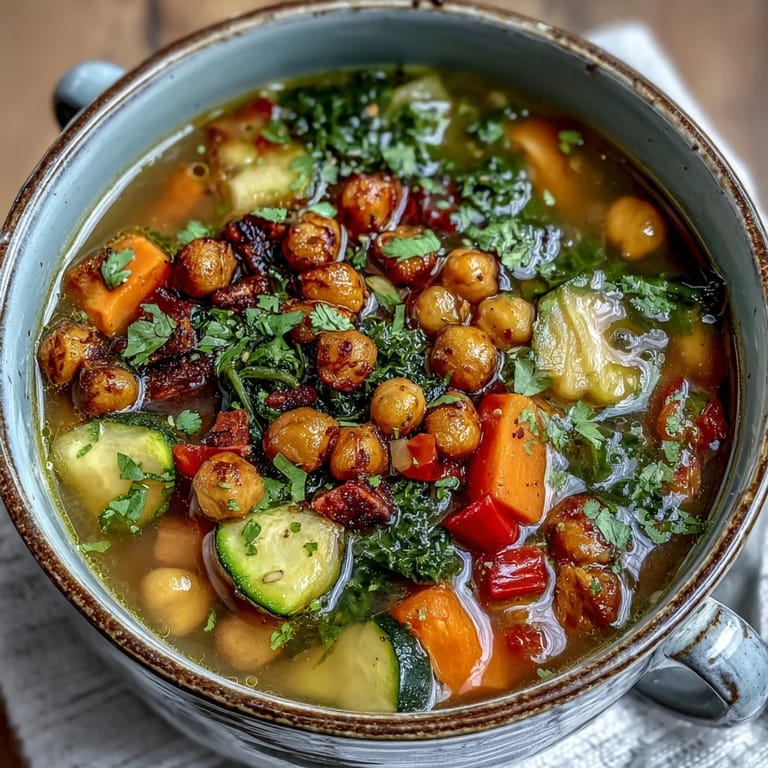
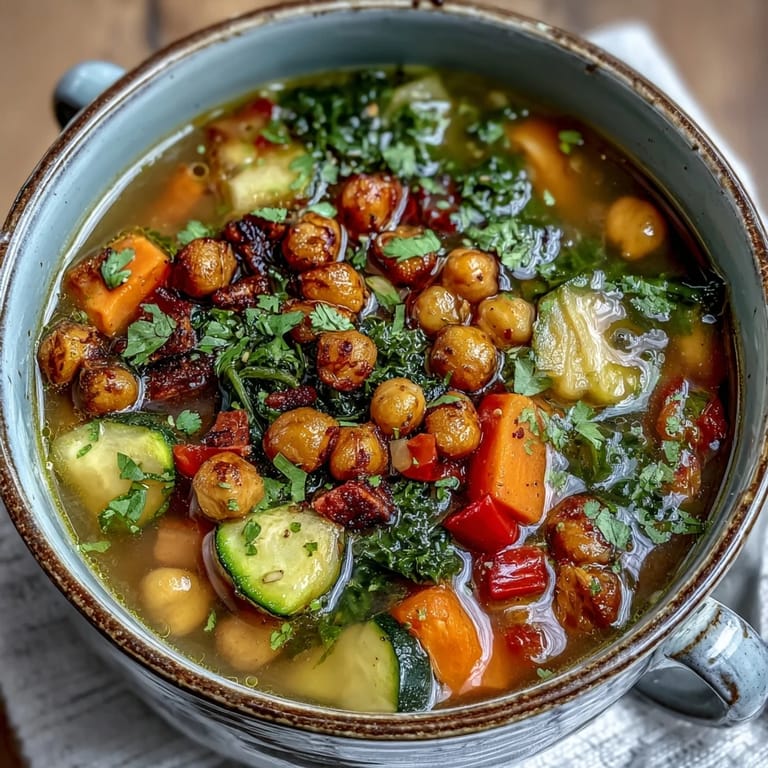
- Add your fresh lemon juice, taste, and adjust salt and pepper as needed—the lemon is crucial because it brightens everything and cuts through the richness. Ladle the soup into bowls and top each one with the remaining crispy chickpeas and a shower of fresh cilantro or parsley.
 Pin it
  Pin it
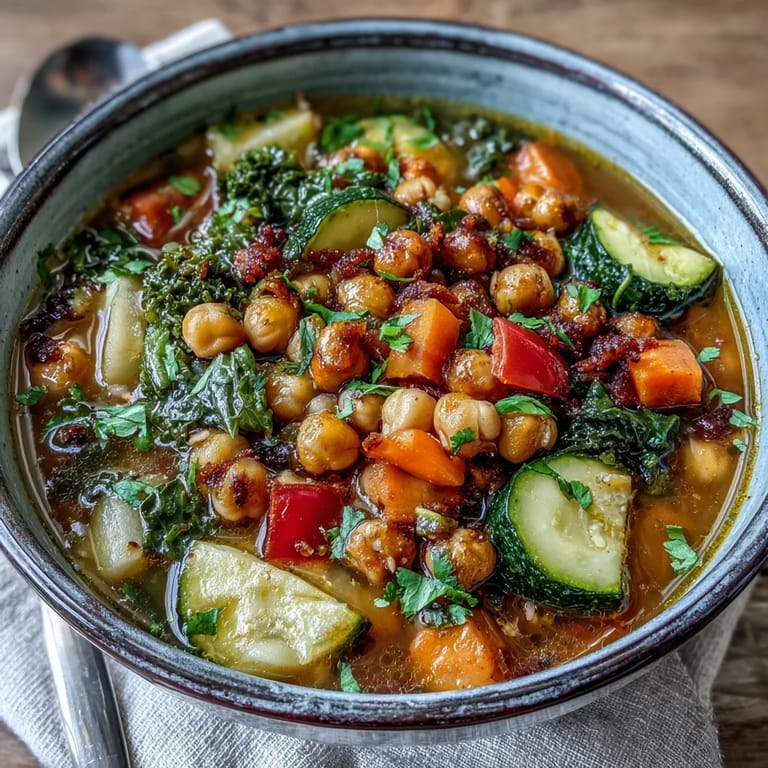
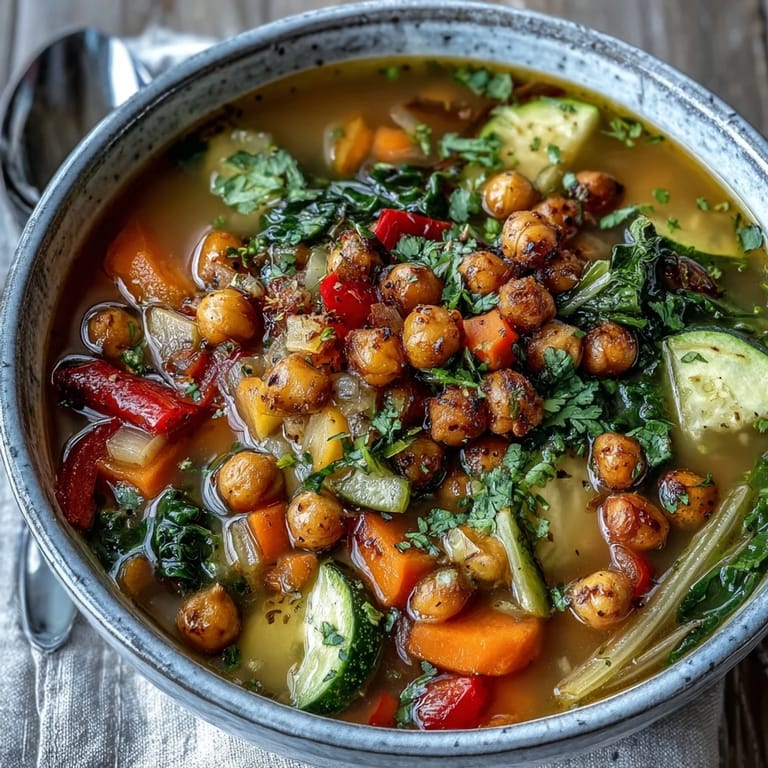
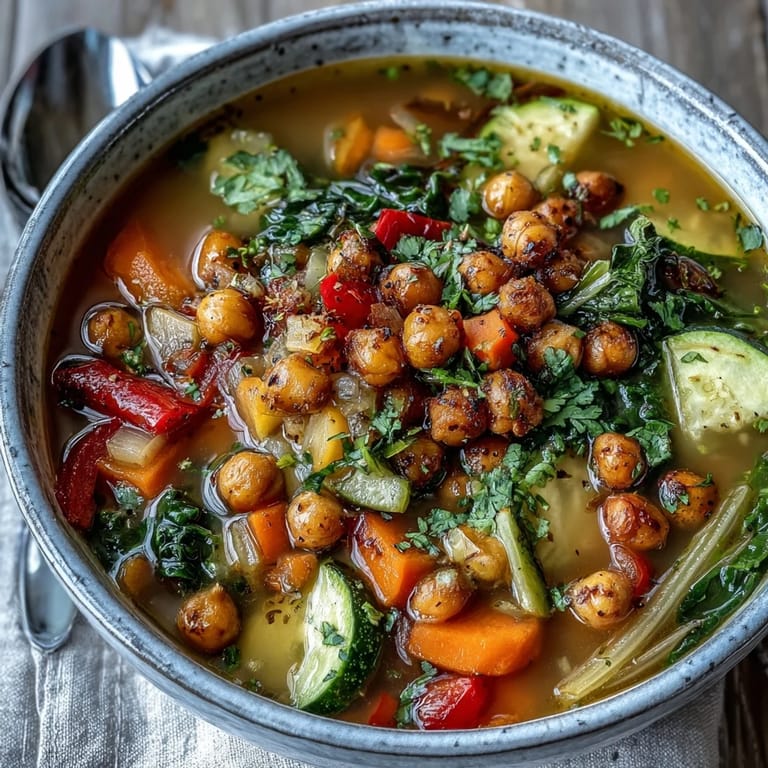
 I learned the power of texture in soup the hard way, after years of making everything silky and samey. Now every spoonful is a mix of tender vegetables, burst tomatoes, creamy broth, and those little crispy chickpea pops that make you actually want to keep eating.
Why the Spices Matter
The spice combination here isn't random—it's inspired by warm-weather cooking traditions where cinnamon shows up in savory dishes because it adds depth without sweetness. Turmeric brings an earthy undertone, coriander rounds everything out, and smoked paprika gives the chickpeas a little edge. Together they transform what could be a boring vegetable soup into something you actually crave when the weather turns cold.
How to Make It Your Own
This soup is flexible enough to bend to whatever you've got in your vegetable drawer or your pantry. Swap the zucchini for sweet potato or parsnip, use any hearty greens instead of kale, or stir in coconut milk at the end if you want it richer. I've even made it with cubed eggplant and it was just as good, though my timing changed because eggplant takes longer to soften.
Serving Suggestions and Storage
This soup keeps beautifully for up to four days in the fridge and tastes even better the next day once the flavors have had time to settle and deepen. Reheat gently on the stovetop rather than in the microwave if you want to preserve the texture of the vegetables, and add a splash of broth if it's thickened too much.
- Serve with crusty bread for dipping or over cooked rice to make it more substantial.
- If you're cooking for someone who loves heat, pass the cayenne shaker at the table so they can adjust the spice level themselves.
- The roasted chickpeas are also great as a snack on their own, so you might want to make extra and eat some before they ever make it into the soup.
 Pin it
  Pin it
 This is the kind of soup that makes you feel like you're taking care of yourself and everyone around you at the same time. Make it once and you'll find yourself making it again on the afternoons when you need something warm and real.
Recipe FAQs
- → Can I use dried chickpeas instead of canned?
Yes, use 1½ cups cooked chickpeas. Soak dried chickpeas overnight, then cook until tender before roasting.
- → What vegetables can I substitute?
Try sweet potato, cauliflower, green beans, or butternut squash. Adjust cooking time based on vegetable density.
- → How do I make this soup creamier?
Stir in ½ cup coconut milk or cashew cream at the end. You can also blend a portion of the soup before adding greens.
- → Can I make this ahead of time?
Yes, prepare up to 3 days ahead. Store roasted chickpeas separately to maintain crispness. Reheat gently and add chickpeas when serving.
- → How should I store leftovers?
Store in an airtight container in the refrigerator for up to 4 days or freeze for up to 3 months. Keep roasted chickpeas separate for best texture.
- → What can I serve with this soup?
Pair with crusty bread, naan, pita, or serve over cooked rice or quinoa for a more filling meal.