 Pin it
 My first bowl of miso soup arrived on a cold Tokyo morning, steam rising from a ceramic cup while snow dusted the café windows. The umami hit differently than anything I'd tasted before—earthy, alive, gentle—and I realized soup could be medicine and comfort at once. Years later, I'm still chasing that feeling in my own kitchen, and somehow this simple recipe gets me there every time.
I made this for my roommate during her breakup recovery week, and she ate it three mornings straight before saying anything beyond thank you. There's something about miso soup that heals quietly—no questions asked, no effort required on her part. That's when I stopped thinking of it as a recipe and started thinking of it as an act of showing up for people.
Ingredients
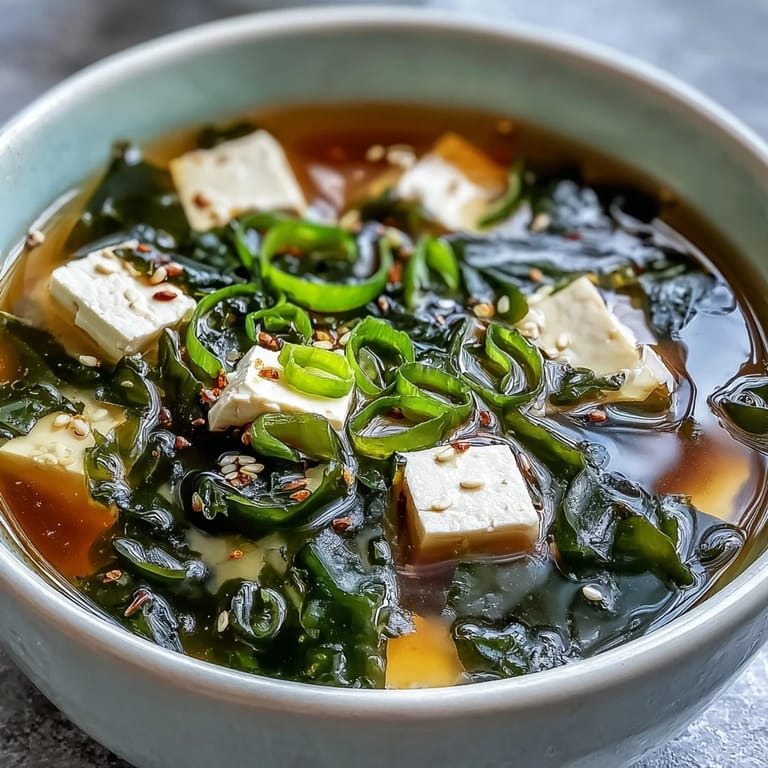
- Dashi stock: The foundation of everything; this delicate broth carries the entire flavor profile, so don't skip it or use water as a shortcut—the difference is profound.
- White or yellow miso paste: Living probiotics that die at high heat, which is why we add it last; this subtle paste is where the magic lives.
- Silken tofu: Impossibly soft and custard-like, it needs a gentle hand and cool water to stay intact in the bowl.
- Dried wakame seaweed: A five-minute soak plumps it back to tender ribbons that dissolve slightly on your tongue.
- Scallions: The bright finish that wakes everything up just before you lift the spoon to your lips.
Tired of Takeout? 🥡
Get 10 meals you can make faster than delivery arrives. Seriously.
One email. No spam. Unsubscribe anytime.
Instructions
- Warm your broth gently:
- Pour dashi into a medium saucepan and bring it to a quiet simmer over medium heat—you want barely there bubbles, not a rolling boil that will destroy the delicate flavors.
- Prepare your seaweed:
- While the broth warms, place dried wakame in a small bowl of cold water and let it sit for five minutes until it softens and unfurls, then drain it gently.
- Create a miso slurry:
- Scoop miso paste into a small bowl and ladle in a generous spoonful of hot dashi, then whisk until completely smooth with no lumps—this keeps the paste from clumping in the soup.
- Build the soup:
- Add your tofu cubes and drained wakame to the simmering broth, then let them warm for two to three minutes, moving gently so the tofu keeps its shape.
- Finish without boiling:
- Pour your miso mixture into the pot and stir to combine, then immediately remove from heat because boiling miso kills the living probiotics you're after.
- Serve with intention:
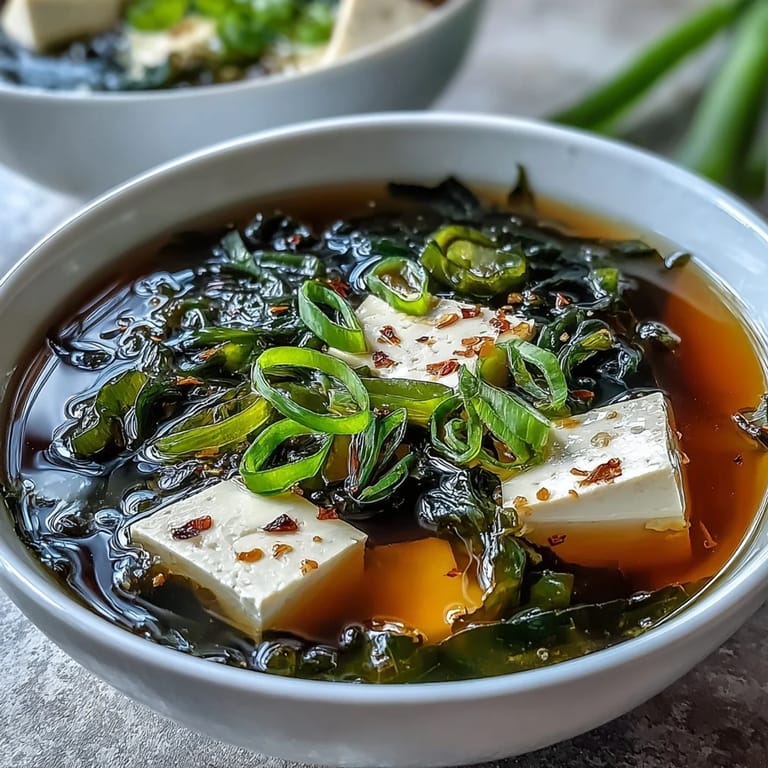
- Ladle into bowls, scatter sliced scallions across the top, and serve right away while the aroma is still rising.
 Pin it
 My grandmother taught me that miso soup is what you make when words aren't enough—when someone needs feeding but you don't know what to say. It's become my quiet language for love.
The Science of Miso
Miso paste is alive with fermented goodness—lactobacillus and other beneficial bacteria that have been working for months or years in the fermentation process. When you add it at the end and skip the boil, you're preserving those living cultures that support your digestive system. The umami flavor comes from glutamates, which is why miso makes everything taste more like itself, more complete.
Dashi: The Invisible Star
Dashi is often glossed over, but it's the entire reason this soup works at all. Made from kombu seaweed and bonito flakes (or just kombu and shiitake for vegetarian versions), it's a broth that's been perfected over centuries. You can make it yourself in 15 minutes, or find quality prepared dashi at any Asian market—either way, it's worth the extra step.
Variations & Next Steps
Once you've made the base recipe twice and feel confident, start experimenting with layers. A small handful of fresh spinach wilts in the bowl from the heat alone; sliced mushrooms add earthiness; mixing red and white miso creates complexity. The template stays the same but your palate discovers something new each time.
- Try adding thin slices of shiitake or enoki mushrooms for an earthy depth.
- Mix white and red miso for a more complex, slightly sweeter profile.
- Stir in a handful of fresh spinach or mizuna greens at the very end for brightness.
 Pin it
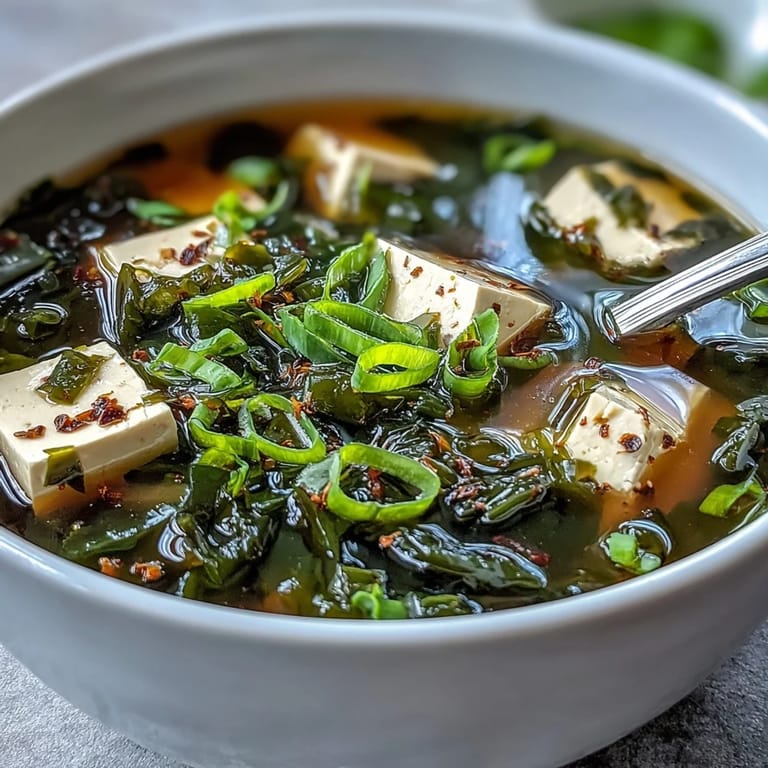
 This soup has taught me that not everything needs to be complicated to be meaningful. Start it and you'll be eating in 20 minutes, but the comfort will last all day.
Recipe FAQs
- → What type of miso works best?
White or yellow miso paste offers a milder, slightly sweet flavor that's perfect for beginners. Red miso provides a deeper, more intense taste. You can also blend both varieties for added complexity and depth.
- → Can I make this vegan?
Absolutely. Simply use vegetarian dashi made from kombu seaweed and dried shiitake mushrooms instead of traditional bonito-based stock. Most miso pastes are naturally vegan, but always check labels to ensure no fish-derived ingredients are included.
- → Why shouldn't I boil miso?
Boiling miso paste destroys beneficial probiotics and enzymes that make it nutritionally valuable. High heat also creates an unpleasant, bitter flavor. Always remove broth from heat before stirring in dissolved miso to preserve its delicate taste and health benefits.
- → How long does homemade miso soup keep?
Freshly prepared soup is best enjoyed immediately, but leftovers can be refrigerated for up to 2 days. The miso flavor will intensify over time, and tofu may become slightly firmer. Reheat gently without boiling to maintain texture and probiotic content.
- → What can I add for extra nutrition?
Thinly sliced mushrooms, fresh spinach, or bok choy make excellent additions. For extra protein, consider adding edamame beans or cooked shrimp. Grated ginger or a drop of sesame oil can enhance the aromatic profile while keeping the traditional essence intact.