 Pin it
 There's something about the smell of cumin and coriander hitting hot oil that stops me mid-thought every single time. A few years back, I was experimenting with plant-based dinners and kept coming back to this chickpea curry because it actually tastes like comfort, not compromise. The first time I made it, my kitchen filled with this warm, slightly sweet aroma that had my roommate asking questions before she even saw the pot. Now it's become my go-to when I want something that feels restaurant-quality but doesn't require any fancy techniques or hard-to-find ingredients.
I made this for a dinner party last fall when I was still figuring out how to cook for mixed dietary preferences. A friend brought her partner who'd recently gone vegan, and instead of panicking, I threw together this curry and watched both of them eat seconds. That moment taught me that good food doesn't announce its limitations—it just tastes genuinely delicious, and people notice.
Ingredients
- Vegetable oil: Use something neutral like canola or grapeseed so the spices shine without competing flavors.
- Onion, garlic, and ginger: This aromatic base is non-negotiable—it's where all the depth comes from, so don't skip the mincing step.
- Ground cumin: Toasting it in oil releases its earthiness in a way that bottled curry powder can never quite replicate.
- Ground coriander: This adds a subtle sweetness that balances the heat and keeps the curry from feeling one-note.
- Ground turmeric: Beyond the color, it brings warmth and a gentle bitterness that grounds the whole dish.
- Garam masala: This is the soul of the curry—it's a spice blend that somehow makes everything taste intentional and complete.
- Chili powder: Start conservative here; you can always add more heat, but you can't take it back.
- Paprika: A small amount adds subtle depth and a whisper of smokiness without overpowering.
- Salt and black pepper: Season generously—these are your only real flavor anchors besides the spices and coconut.
- Chickpeas: Drain and rinse them well to remove excess starch and that slightly metallic canned flavor.
- Coconut milk: Full-fat is absolutely worth it here; the lean versions just won't give you that silky, luxurious sauce.
- Diced tomatoes: The acidity cuts through the richness and keeps the curry balanced and bright.
- Vegetable broth or water: This adjusts the consistency, so add it gradually and taste as you go.
- Baby spinach: Optional, but it wilts down beautifully and adds a nutritional boost without changing the flavor.
- Lime juice: This is the final spark that makes everything pop—don't skip it or use bottled if you can help it.
- Fresh cilantro: A handful scattered on top adds freshness and a hint of herbal brightness at the very end.
Tired of Takeout? 🥡
Get 10 meals you can make faster than delivery arrives. Seriously.
One email. No spam. Unsubscribe anytime.
Instructions
- Build your aromatic base:
- Heat the oil in a large skillet over medium heat and add your diced onion, letting it soften for 4 to 5 minutes until it's translucent and just starting to turn golden at the edges. This isn't a rush—give it time because caramelizing even slightly makes a real difference in the final flavor.
- Wake up the garlic and ginger:
- Once your onion is ready, stir in the minced garlic and grated ginger and let them cook for just a minute until the kitchen smells like something exciting is happening. Be careful not to let them burn, or they'll turn bitter.
- Toast your spice blend:
- Add all your dry spices—cumin, coriander, turmeric, garam masala, chili powder, paprika, salt, and pepper—and stir constantly for about a minute. You'll hear them crackle slightly and smell their individual personalities come alive, which means they're ready to go to work.
- Build the sauce:
- Pour in your drained chickpeas, the canned tomatoes with their juices, coconut milk, and vegetable broth, stirring everything together until the spices are evenly distributed and there are no dry pockets hiding at the bottom of the pan. The mixture should smell warm and inviting already.
- Let it simmer gently:
- Bring everything to a gentle simmer, cover the pan, and let it cook undisturbed for about 15 minutes, stirring occasionally so nothing sticks to the bottom. The flavors will deepen and meld together as the chickpeas absorb all that coconut-spice goodness.
- Add greens if you want:
- If you're using spinach, add it now and let it wilt for another 2 to 3 minutes—it'll disappear into the sauce but add texture and nutrition. You can skip this entirely if spinach isn't your thing; the curry is complete without it.
- Finish with brightness:
- Squeeze in your lime juice and taste carefully, adjusting salt or chili powder to get it exactly where you want it. The lime brings everything into focus and lifts the whole dish.
- Serve with something to soak it up:
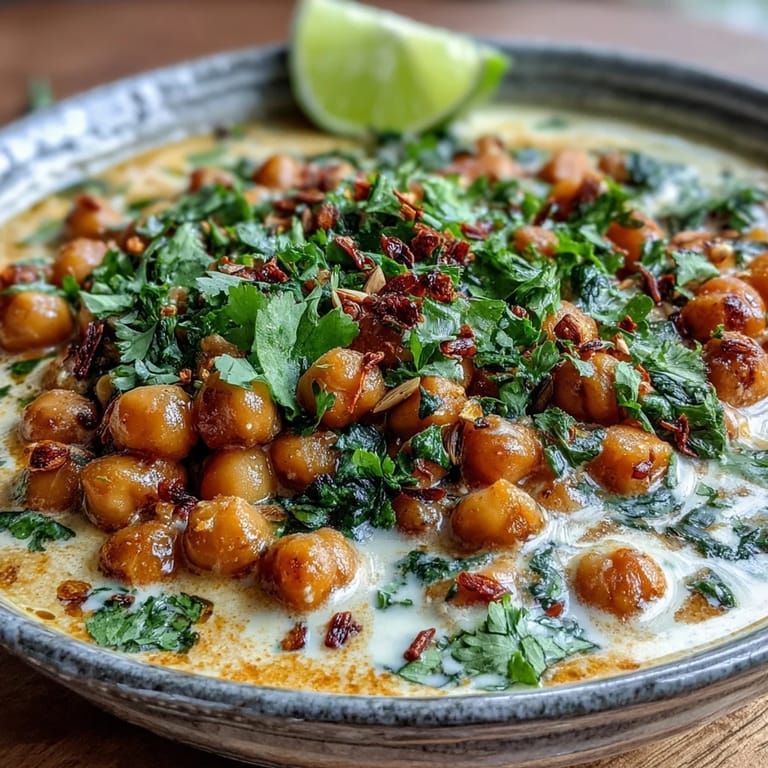
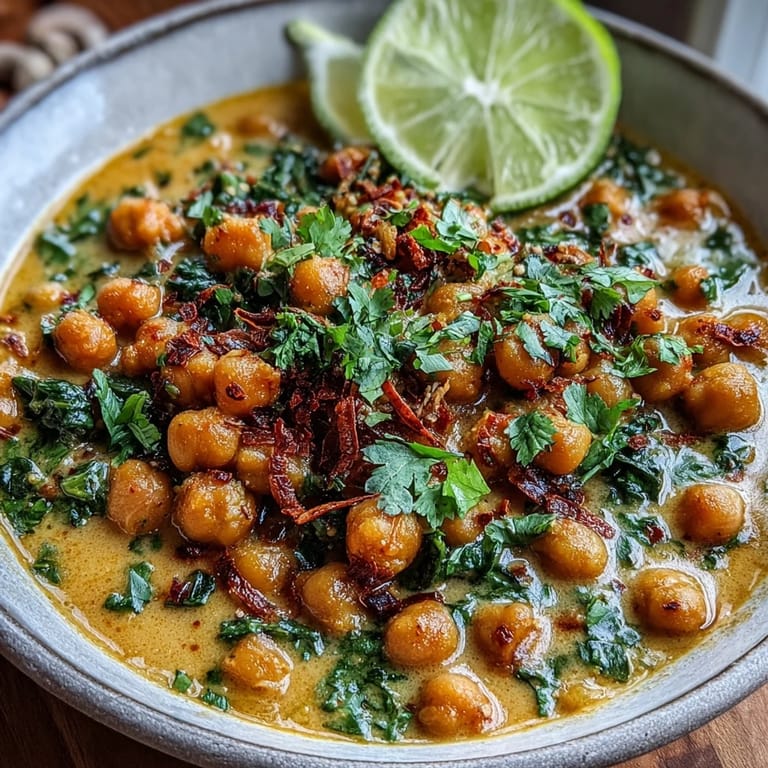
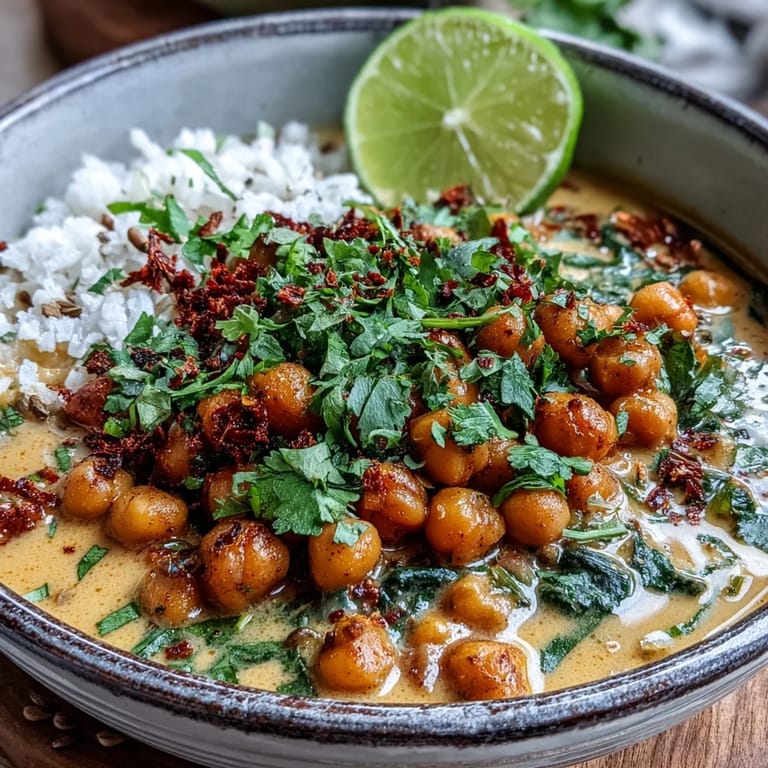
- Ladle the curry into bowls and top with fresh cilantro and a lime wedge for squeezing over just before eating. Serve alongside steamed rice, brown rice, or warm naan.
 Pin it
 One evening, I made this curry on a night when nothing felt right—the day had been long and my energy was shot. By the time I was stirring in that lime juice and the whole kitchen had transformed into this warm, fragrant sanctuary, everything felt a little bit better. That's when I realized this dish does something beyond just filling your stomach; it quietly takes care of you.
Customizing Your Curry
The beauty of this recipe is that it genuinely welcomes changes without falling apart. I've added roasted sweet potato, bell peppers, cauliflower, and even a handful of green peas, and every single version tasted complete and intentional. The chickpeas and spices are forgiving enough that you can treat this as a template rather than a rule—adjust vegetables based on what's in your crisper drawer or what you're craving.
Adjusting Heat and Spice Level
Heat is deeply personal, and this recipe respects that by starting gentle and letting you control how much chili powder you add. I've learned to start with half a teaspoon and taste before adding more, because even a quarter teaspoon extra can shift the whole balance. If you accidentally go too hot, a spoonful more coconut milk or a squeeze of lime will help ease the burn.
Storage, Reheating, and Next-Day Magic
This curry is one of those rare dishes that tastes even better the next day, after all the spices have had time to get to know each other. It stores beautifully in the fridge for up to four days and reheats gently on the stovetop over low heat or in the microwave with a splash of water if it's gotten too thick. Make it on a Sunday evening and you'll have stress-free dinners waiting all week.
- Let it cool completely before refrigerating to preserve the texture and prevent condensation from making the sauce watery.
- If you're freezing it, leave out the spinach and lime juice, adding them fresh when you reheat—spinach gets mushy and lime juice can taste slightly off after freezing.
- When reheating, go low and slow to keep the chickpeas tender and prevent the coconut milk from splitting or separating.
 Pin it
 This curry has become my answer to almost everything: a weeknight dinner when I'm tired, a dish to bring when friends have dietary restrictions, a way to prove to myself that plant-based cooking can be genuinely delicious. Once you make it a few times, you'll stop looking at the recipe and start cooking by smell and intuition, which is really when it becomes yours.
Recipe FAQs
- → How spicy is this curry?
The spice level is moderate and customizable. The combination of chili powder, paprika, and garam masala provides gentle warmth without overwhelming heat. You can easily adjust the chili amount to suit your preference.
- → Can I make this curry ahead of time?
Absolutely. This dish actually develops deeper flavors when made ahead and stored in the refrigerator for 1-2 days. Reheat gently on the stovetop, adding a splash of water or broth if needed to restore consistency.
- → What can I serve with chickpea curry?
Steamed basmati rice or brown rice are classic accompaniments. Warm naan, roti, or gluten-free flatbread work wonderfully for scooping up the creamy sauce. You could also serve over quinoa or cauli-rice for a lighter option.
- → How do I store leftovers?
Store cooled curry in an airtight container in the refrigerator for up to 4 days. The flavors continue to meld over time. You can also freeze portions for up to 3 months. Thaw overnight in the fridge before reheating.
- → Can I add other vegetables?
Certainly. Diced sweet potato, bell peppers, cauliflower, or green beans make excellent additions. Add heartier vegetables like sweet potato when you add the chickpeas so they have time to become tender. Quick-cooking vegetables like spinach go in during the last few minutes.
- → Is full-fat coconut milk necessary?
Full-fat coconut milk creates the richest, most luscious sauce. However, light coconut milk works if you prefer a lighter version. The sauce will be slightly less creamy but still delicious. Avoid carton coconut milk beverages as they're too thin.