 Pin it
 My sister once told me that confiting salmon was impossible to mess up, and I laughed because I'd burned rice that morning. But she was right. The first time I slid those fillets into warm olive oil and watched them turn glossy and tender without any fuss, I realized some techniques are just gifts. There's something almost meditative about it, the low heat, the patience, the way the fish emerges so soft it barely needs a fork. And then you add that tahini-pistachio crust, bright green and nutty, and suddenly you have a dish that looks like you spent all day on it.
I made this for a small dinner party last spring, and my friend Nadia, who grew up eating tahini on everything, took one bite and said it tasted like home. That's when I understood how a single ingredient can carry so much weight. The pistachios added crunch, the herbs kept it light, but it was the tahini that made it sing. We ate it with warm flatbread and didn't talk much for a few minutes, which is always a good sign.
Ingredients
- Salmon fillets (about 150 g each): Look for skinless, pin-boned fillets with even thickness so they cook uniformly in the oil.
- Olive oil (500 ml): This is your poaching medium, not a waste, strain it after and use it for roasting vegetables or drizzling over grains.
- Lemon zest: Adds a quiet brightness that cuts through the richness without overpowering the fish.
- Sea salt and black pepper: Season generously before the oil bath, the salmon will soak up just enough.
- Shelled pistachios (60 g): Chop them finely by hand for texture, a food processor can turn them pasty too quickly.
- Tahini (3 tbsp): Stir it well before measuring, the oil separates and you want it smooth and pourable.
- Garlic clove: Grate it finely so it melts into the crust without any harsh bite.
- Fresh parsley, dill, and mint: The trio brings a garden-fresh flavor that makes the crust feel alive, don't skip any of them.
- Lemon juice (1 tbsp): Balances the tahini's richness and keeps the crust from feeling heavy.
- Honey (1 tsp): Just a touch to round out the acidity and bring everything together.
- Ground cumin (½ tsp): A warm, earthy note that ties the Mediterranean flavors into place.
Tired of Takeout? 🥡
Get 10 meals you can make faster than delivery arrives. Seriously.
One email. No spam. Unsubscribe anytime.
Instructions
- Prep the oven and salmon:
- Preheat your oven to 100°C (210°F), which is low and gentle, perfect for confit. Season the salmon fillets with salt, pepper, and lemon zest, then nestle them snugly in a small ovenproof dish.
- Confit the salmon:
- Pour olive oil over the fillets until they're mostly submerged, then slide the dish into the oven for 25 to 30 minutes. The fish should turn opaque and flake easily, with a texture that's almost buttery.
- Make the tahini-pistachio crust:
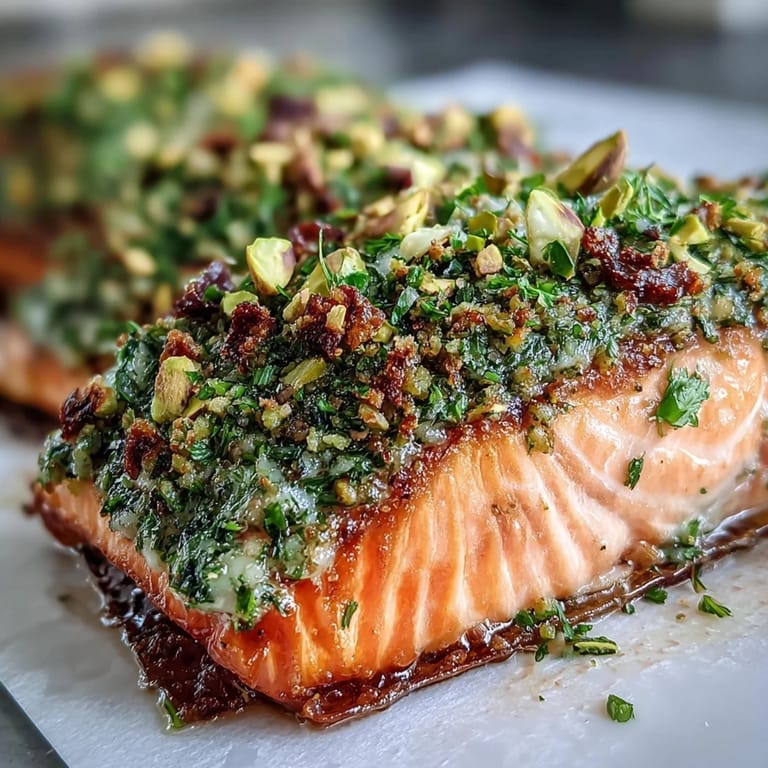
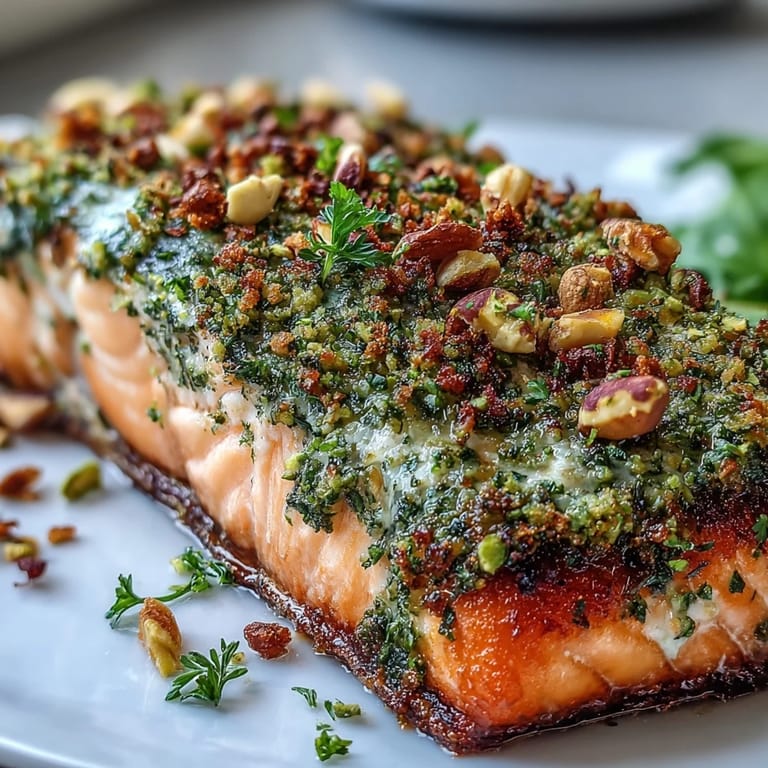
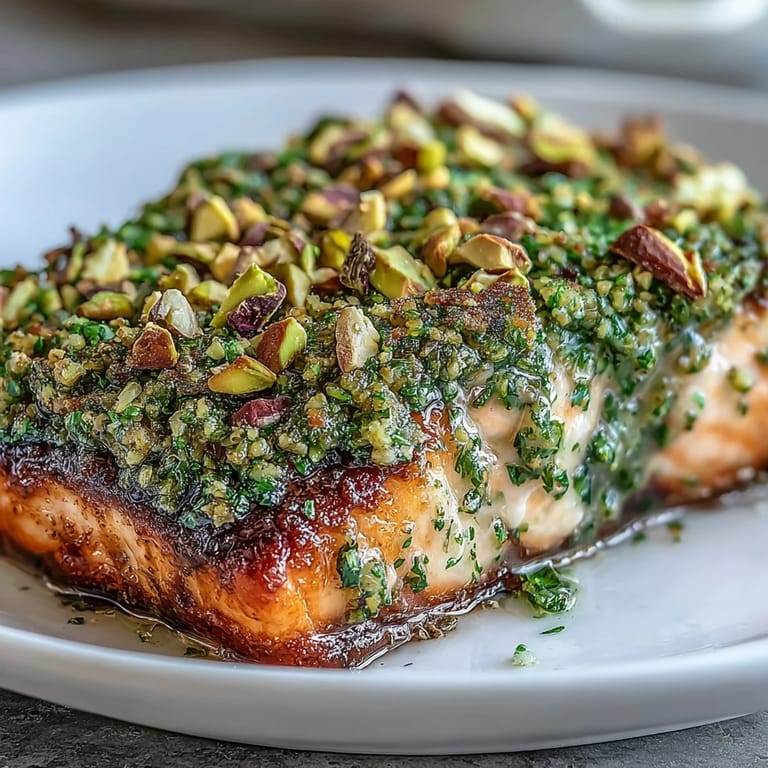
- While the salmon cooks, combine chopped pistachios, tahini, grated garlic, parsley, dill, mint, lemon juice, honey, cumin, and a pinch of salt and pepper in a bowl. Stir until it forms a thick, spoonable paste with visible green flecks.
- Drain and rest the salmon:
- Carefully lift the cooked fillets from the oil using a slotted spatula and place them on a paper towel-lined plate. Let them cool slightly so they firm up just enough to handle.
- Apply the crust:
- Spread a generous layer of the tahini-pistachio mixture over the top of each fillet, pressing gently so it adheres. The crust should look vibrant and textured.
- Serve:
- Plate the salmon warm or at room temperature, and garnish with extra chopped herbs, lemon wedges, and a drizzle of olive oil if you like. It's beautiful as is.
 Pin it
 The first time I served this to my dad, a man who usually orders his fish grilled and plain, he asked for the recipe. That felt like a small victory. It wasn't just the salmon, it was the crust, the way the pistachios crunched against the soft fish, the way the herbs made every bite feel fresh and intentional. He ate it with his hands, scooping it onto torn flatbread, and didn't apologize once.
Choosing Your Salmon
I always buy the thickest fillets I can find because they hold up better in the confit and stay moist all the way through. Wild-caught salmon has a firmer texture and deeper flavor, but farmed salmon works beautifully too and is often more affordable. If you can, ask your fishmonger to remove the skin and pin bones, it saves time and guarantees an elegant result. Freshness matters here, the fish should smell like the ocean, not fishy, and the flesh should spring back when you press it lightly. I've learned that investing in good salmon makes this dish shine without any extra effort.
Storing and Reusing the Confit Oil
After you lift the salmon out, let the oil cool completely, then strain it through a fine mesh sieve or cheesecloth into a clean jar. It'll carry a subtle salmon flavor, which makes it perfect for roasting vegetables, tossing with pasta, or drizzling over hummus. I keep mine in the fridge and use it within a week, though it can last longer if stored properly. Some people toss it, but that feels wasteful when it's this good. Just label the jar so you remember what it is, I once used it in a cake batter by mistake and that was a learning moment.
Serving Suggestions and Variations
This salmon loves to be paired with light, bright sides that don't compete with the crust. I often serve it over a bed of arugula dressed simply with lemon and olive oil, or alongside roasted cherry tomatoes and couscous. Warm flatbread or pita is non-negotiable in my house, perfect for scooping up any fallen crust or extra tahini. If you want to switch up the nuts, try almonds or walnuts, though pistachios have that signature sweetness that's hard to beat. Sometimes I add a handful of pomegranate seeds on top for a pop of color and tartness.
- Serve with a crisp green salad, cucumber ribbons, or warm grains like farro or quinoa.
- For a heartier meal, pair it with roasted sweet potatoes or a lemony white bean salad.
- If you have leftover crust, it doubles as a brilliant dip for vegetables or spread for toast.
 Pin it
 This dish taught me that technique doesn't have to be complicated to feel special. Every time I make it, I'm reminded that good food is about balance, the richness of the fish, the brightness of the herbs, the crunch of the nuts, and taking your time.
Recipe FAQs
- → What is confit salmon and how does it differ from regular baked salmon?
Confit salmon is gently poached in olive oil at a low temperature (100°C), resulting in incredibly tender, moist fish with a silky texture. Unlike regular baking, this method prevents the salmon from drying out and creates a more luxurious, melt-in-your-mouth consistency.
- → Can I reuse the olive oil after making confit salmon?
Yes, you can strain and reuse the confit oil for future cooking. Store it in an airtight container in the refrigerator and use it for sautéing vegetables, making dressings, or preparing another batch of confit fish or proteins.
- → How do I know when the salmon is perfectly cooked?
The salmon is done when it's just opaque and flakes easily with a fork, typically after 25-30 minutes at 100°C. It should still be slightly translucent in the very center and feel tender when gently pressed.
- → Can I substitute the pistachios with other nuts?
Absolutely! Almonds or walnuts work beautifully as alternatives to pistachios. Simply chop them finely and use the same quantity. Each nut will bring a slightly different flavor profile to the herb crust.
- → What side dishes pair well with this confit salmon?
This salmon pairs wonderfully with crisp green salads, warm flatbread, roasted vegetables, quinoa, or couscous. The rich, oil-poached fish benefits from fresh, light accompaniments that complement the Mediterranean flavors.
- → Can I make the tahini-pistachio crust ahead of time?
Yes, the crust mixture can be prepared up to 24 hours in advance and stored in an airtight container in the refrigerator. Simply bring it to room temperature before spreading it on the cooked salmon for easier application.