 Pin it
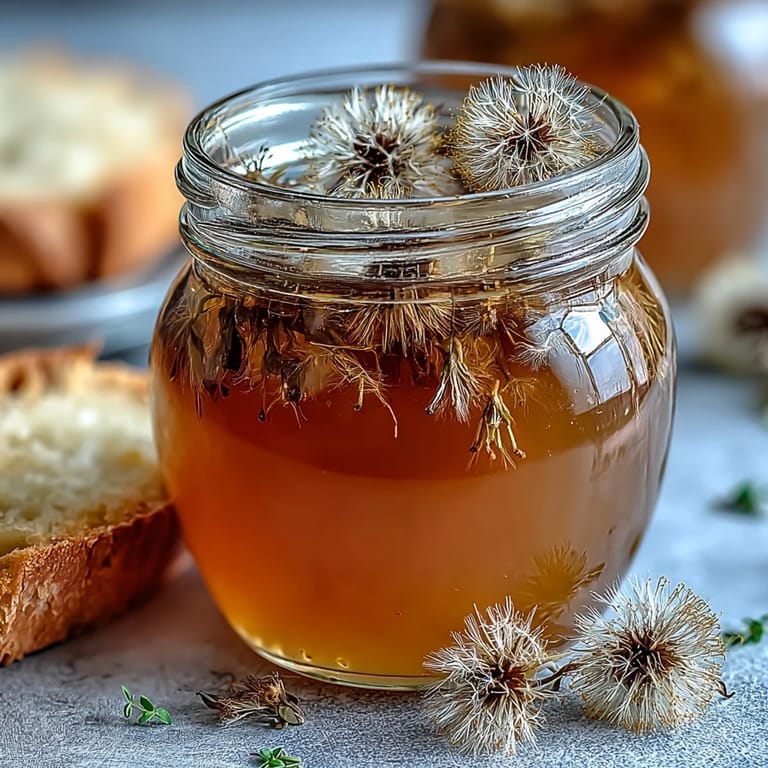
 My neighbor kept pointing at her overgrown lawn one spring, half-joking about the dandelions taking over, and I suddenly remembered my grandmother mentioning she used to make jelly from them. That conversation sparked something, and I found myself on my hands and knees one Saturday morning, carefully picking those bright yellow flowers, feeling a bit silly but oddly connected to something resourceful and forgotten. The kitchen filled with this honeyed, grassy steam as they steeped, and I realized I was making something that had probably fed people through harder times. Now, whenever I open a jar, it smells like that exact morning and tastes like spring decided to stay.
I made this for the first time for a potluck brunch where everyone brought something fancy, and I showed up with homemade dandelion jelly like I'd lost my mind. But when people tasted it on fresh scones, the room got quiet in that way that means something unexpected just happened. One woman asked for the recipe, another wanted to know where I bought it, and a third person admitted they'd never thought dandelions could become something this beautiful.
Ingredients
- Dandelion petals (2 cups, yellow parts only): Only the bright yellow petals matter here—the green sepals underneath will make everything taste bitter, so take time to strip them away completely and grab flowers from somewhere you know hasn't been sprayed.
- Water (4 cups): This becomes your infusion base, steeping out all that delicate floral essence that makes the jelly sing.
- Lemon juice (2 tablespoons, freshly squeezed): This brightens the sweetness and helps the jelly set properly, so don't skip it or use bottled juice.
- Powdered fruit pectin (1 package, 1.75 oz): The science that turns your infusion into something that spreads instead of pools—measure carefully and stir it in thoroughly so no lumps hide at the bottom.
- Granulated sugar (4 cups): This is where sweetness and preservation live together, and you need all of it for the jelly to set and keep safely.
Tired of Takeout? 🥡
Get 10 meals you can make faster than delivery arrives. Seriously.
One email. No spam. Unsubscribe anytime.
Instructions
- Pick and prepare your dandelions:
- Find flowers in a spot you trust—no roadside or treated lawns—and pick them on a dry morning when they're fully open. Once home, pinch off just the yellow petals and discard the green parts, working over a bowl to catch all the delicate pieces.
- Rinse gently and start steeping:
- Pour cool water over the petals in a bowl and swish them gently to dislodge any tiny bugs or dust, then drain. Combine the petals with 4 cups of water in a saucepan and bring everything to a boil, watching as the water turns golden, then simmer for exactly 5 minutes.
- Let time do the work:
- Turn off the heat, cover the pot, and walk away for at least 4 hours—overnight is even better if you can manage it. The longer the petals steep, the more flavor and color they'll surrender to the water, creating that haunting floral intensity.
- Strain and measure your liquid:
- Set a fine mesh sieve over a large bowl and pour everything through slowly, letting gravity do most of the work. Once it stops dripping on its own, gently press the petals with the back of a spoon to coax out the last bit of golden liquid, then discard the spent flowers and measure what you have—you should have about 3½ to 4 cups.
- Combine, pectin, and build heat:
- Pour your dandelion infusion into a large, heavy-bottomed pot, add the lemon juice and pectin, and stir constantly as you bring it all to a rolling boil—the kind that doesn't calm down when you stir. Once it's truly boiling hard, dump in all the sugar at once and keep stirring so nothing sticks to the bottom.
- Boil to setting point:
- Keep that rolling boil going for 1 to 2 minutes while watching a thermometer until it reads 220°F, which is when the jelly will actually set. You'll feel the texture change slightly on a cold spoon if you test it—the mixture should wrinkle and hold together rather than run.
- Jar and seal while hot:
- Remove from heat and skim any foam off the top with a spoon, then ladle the hot jelly into sterilized jars, leaving exactly ¼ inch of space at the top. Wipe the rims clean, seal with new lids, and process in a boiling water bath for 10 minutes to ensure they seal safely.
- Rest and listen for the pop:
- Let the jars cool undisturbed for at least 12 hours—don't move them or check them, just let them sit. You'll hear that satisfying pop as each one seals, and once they're completely cool, press the center of each lid to make sure it's sealed before storing.
 Pin it
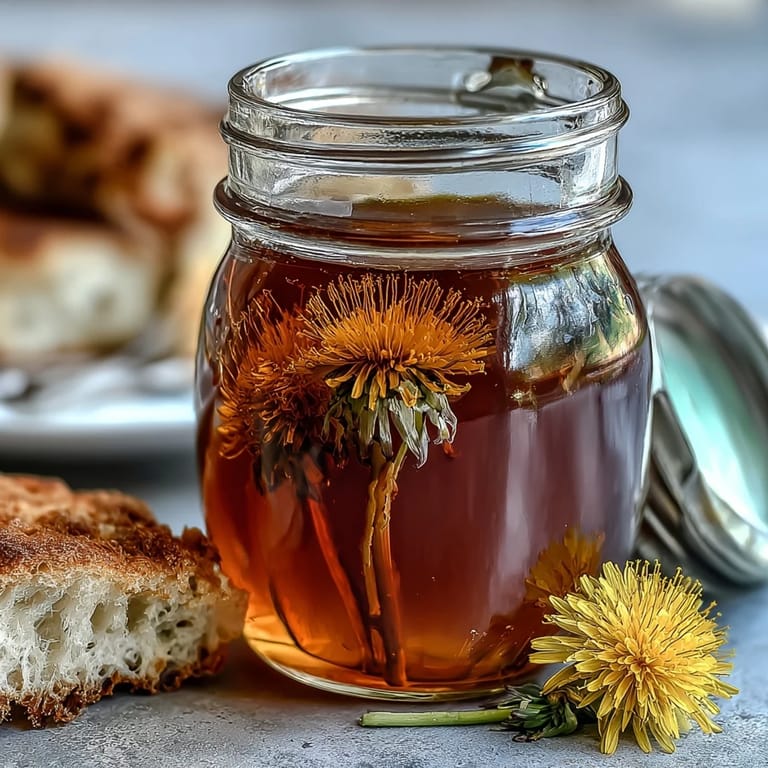
 I gave a jar to my yoga instructor once, and she texted me months later saying she'd been saving it for something special. When she finally opened it, she was sitting on her back porch at dawn, and suddenly that little jar connected her to the whole quiet ritual of foraging and patience and slow mornings. That's when I understood that this jelly is really about time and intention packaged into something spreadable.
The Foraging Part Matters More Than You Think
Most people see dandelions as a nuisance, which is exactly why this recipe feels a bit rebellious and resourceful. Knowing where to forage—asking neighbors, avoiding roads, steering clear of lawns that have been treated with anything—becomes part of the recipe itself. The best batch I ever made came from my friend's organic garden where dandelions grew wild and happy, and you could taste the difference in how bright and clean the flavor was.
Timing and Patience Change Everything
The four-hour steep is not a suggestion or a shortcut you can skip—it's the entire foundation of flavor. I learned this the hard way by trying to rush it, and the resulting jelly tasted faintly herbal and vague, like I'd wasted perfectly good dandelions on impatience. Now I plan this recipe for mornings when I can let time stretch, often starting it as soon as I finish picking and coming back to it right before dinner.
What Comes Next and How to Use It
Once you have jars of this golden jelly sitting on your shelf, the real fun begins. Spread it on buttered toast while it's still warm, swirl it into yogurt, use it as a glaze on roasted duck or pork, or layer it in a cheese plate where its floral sweetness plays against something sharp and aged. I've even stirred a spoonful into sparkling water for an unusual and delicate drink.
- Toast thickly cut bread, spread warm jelly on it while the butter is still melting, and understand why people write poetry about simple things.
- Pair it with mild cheeses like ricotta or fresh goat cheese where the flavor can shine without competing.
- Keep these jars visible on a shelf so you'll actually use them instead of saving them for an occasion that never comes.
 Pin it
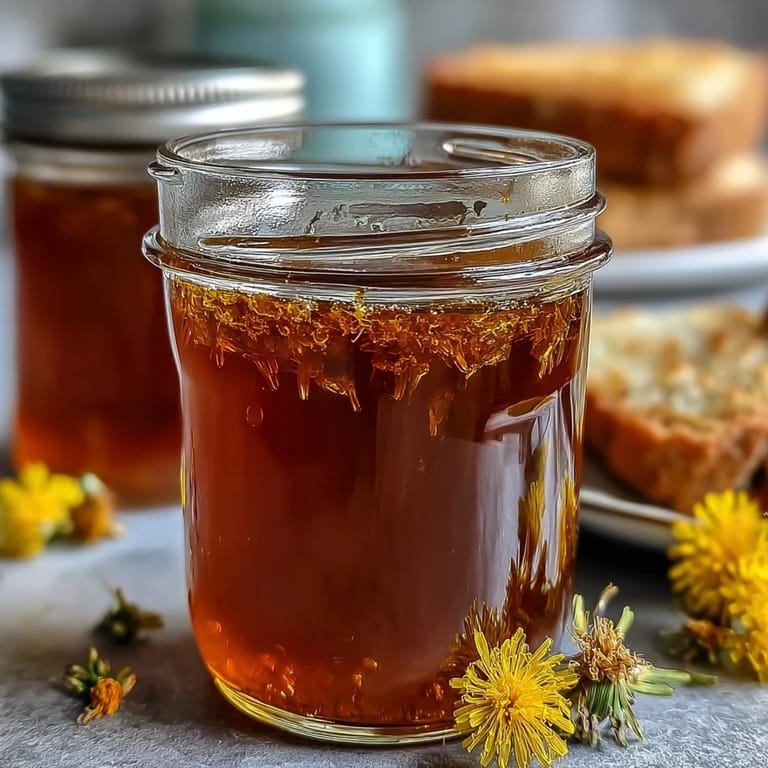
 This recipe taught me that the most beautiful things often grow where nobody's looking, waiting for someone curious enough to see their potential. Every jar you make becomes a small story of seasons and foraging and the quiet satisfaction of turning something wild into something that nourishes people you care about.
Recipe FAQs
- → How do I prepare dandelion petals for infusion?
Remove all green parts such as sepals and stems to avoid bitterness, then rinse petals gently to clean any debris or insects.
- → What is the purpose of steeping the dandelion petals for several hours?
Steeping extracts the delicate floral flavors deeply, enhancing the overall aroma and taste of the spread.
- → Can I adjust the sweetness of the final product?
Yes, reducing sugar slightly or using low-sugar pectin allows for a less sweet flavor while maintaining texture.
- → What are some recommended pairings for this floral spread?
It pairs beautifully with toast, scones, pancakes, and as a glaze or accompaniment for various cheeses.
- → Are there any special safety tips when foraging dandelions?
Always collect from clean, pesticide-free areas to ensure safety and purity of the spread.