 Pin it
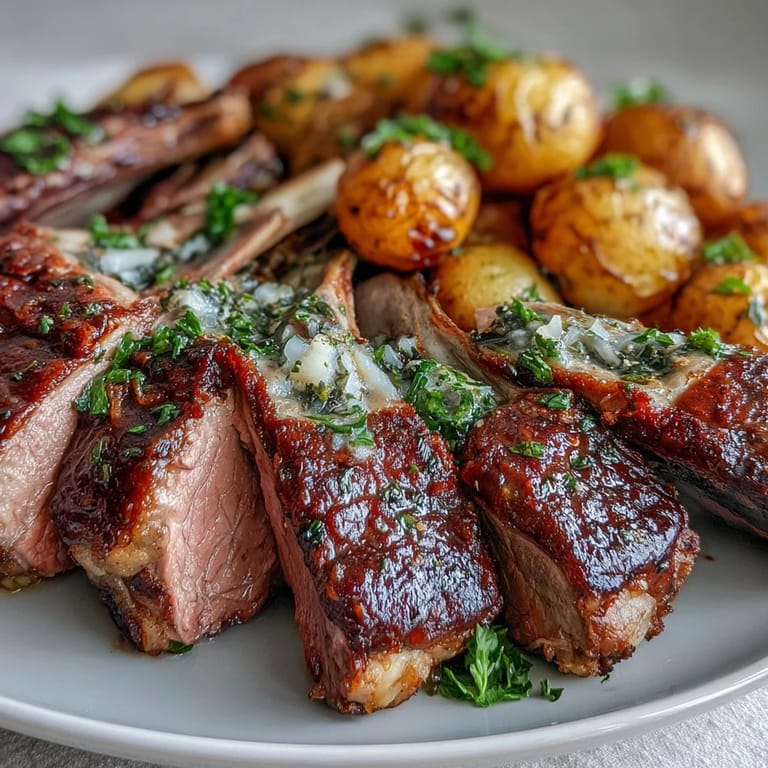
 The oven light was casting this warm glow across the kitchen, and I could smell the rosemary hitting the heat before I even closed the oven door. I was trying to impress someone without looking like I was trying too hard, so I went with lamb, one pan, and a bottle of wine I pretended to know about. The potatoes turned out crispier than I expected, and the olives made everything taste like I'd actually planned it. It worked, by the way.
I made this on a Tuesday once, just because. No occasion, no guests, just me and my partner pretending we were at a bistro instead of eating off mismatched plates. The lamb rested under foil while we poured the wine, and by the time we sat down, the whole apartment smelled like a kitchen that knew what it was doing. We didn't talk much during dinner, just pointed at things on the plate and nodded.
Ingredients
- Rack of lamb (Frenched): Frenched just means the bones are cleaned, which makes it look chef-y and easier to slice later.
- Dijon mustard: This is the glue that holds the herbs onto the meat and adds a quiet sharpness that balances the richness of the lamb.
- Fresh rosemary and thyme: Dried herbs won't give you that piney, fragrant crust, so if you can, go fresh here.
- Baby potatoes: Halving them exposes more surface area to crisp up, and they soak up all the lamb drippings if you angle the tray right.
- Smoked paprika: Just half a teaspoon makes the potatoes taste like they've been cooking over coals, even though they haven't.
- Green olives: Briny, a little fruity, and they cut through the fat of the lamb in a way that feels intentional.
- Lemon zest: Don't skip this, it wakes everything up right at the end when you think the dish is done.
Tired of Takeout? 🥡
Get 10 meals you can make faster than delivery arrives. Seriously.
One email. No spam. Unsubscribe anytime.
Instructions
- Get the oven ready:
- Preheat to 220°C and line your tray. The high heat is what gives the lamb that crust and the potatoes those crispy edges.
- Season the potatoes:
- Toss them with olive oil, smoked paprika, oregano, salt, and pepper, then spread them on one side of the tray so they have room to breathe. Crowding them will steam them instead of roasting.
- Prep the lamb:
- Pat it dry, then rub it all over with the olive oil, mustard, rosemary, thyme, garlic, salt, and pepper mixture. You want every bit of the rack covered, especially the fat cap.
- Arrange on the tray:
- Place the lamb fat side up on the other side of the tray, away from the potatoes. This keeps the flavors distinct until you're ready to bring them together.
- Roast:
- Slide the tray into the oven and roast for 25 minutes for medium-rare, flipping the potatoes halfway through. Use a thermometer if you're unsure, you're aiming for about 54°C internal.
- Make the olive mix:
- While everything roasts, combine the olives, parsley, lemon zest, and capers in a small bowl. This is your finish line.
- Rest the lamb:
- Tent it loosely with foil and let it sit for 8 to 10 minutes. This is not optional, it keeps the juices inside instead of all over your cutting board.
- Toss and serve:
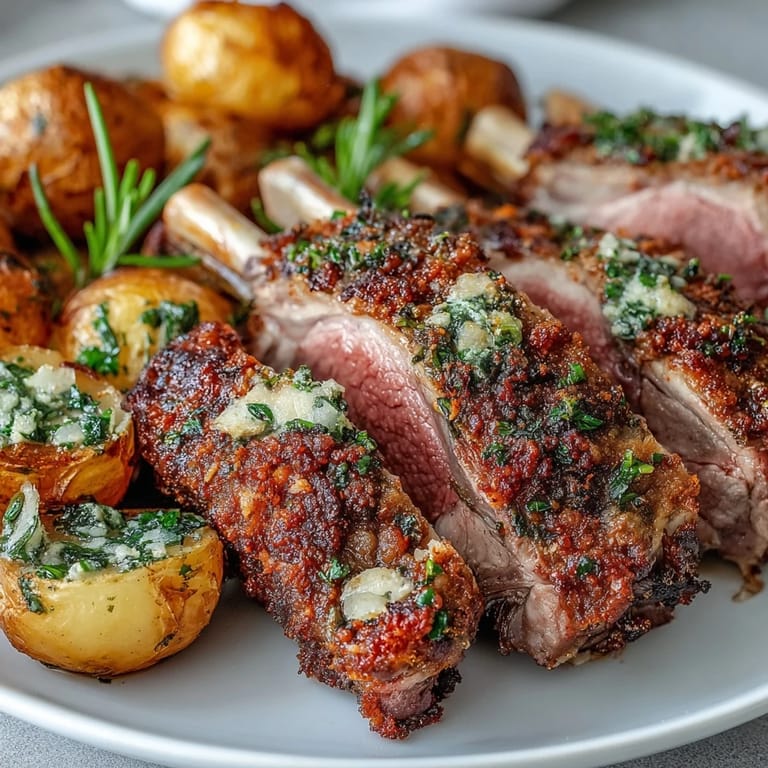
- Scatter the olive mixture over the hot potatoes, toss gently, then slice the lamb into chops. Plate it like you meant for it to look this good.
 Pin it
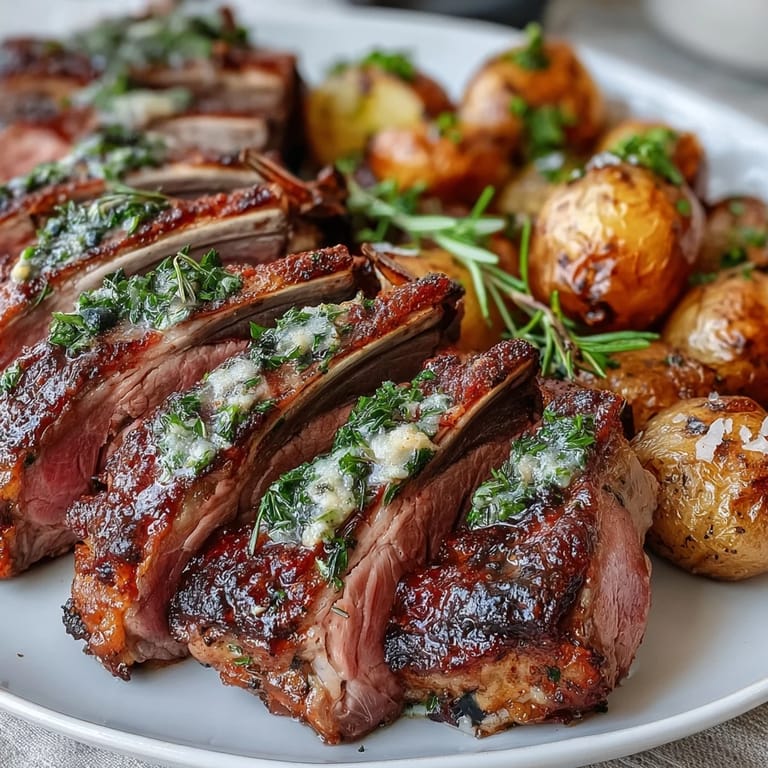
 There was this one night when I plated everything, stepped back, and realized it actually looked like something you'd order. My partner took a photo before we ate, which never happens, and I didn't even feel embarrassed about it. The olives made it feel like we were somewhere else, somewhere with cobblestones and wine that came in carafes.
Choosing Your Lamb
A Frenched rack just means the butcher did the trimming for you, but if yours isn't, you can ask them to do it or just leave the bones as they are. Look for a rack with a nice fat cap on top, that's where all the flavor and moisture come from during roasting. If you can only find a larger rack, just adjust the cooking time up by five or six minutes and check with a thermometer.
Timing for Doneness
Medium-rare is around 54°C internal, medium is closer to 60°C, and if you prefer well-done, you're looking at 65°C or higher. I always pull it a couple degrees early because it keeps cooking while it rests under the foil. The first time I made this, I overshot it and the lamb was fine, just not as juicy, so now I use a thermometer and don't guess.
Serving and Storing
This recipe is built for two, so it's perfect on the same night you make it. Leftovers are rare, but if you have any, the lamb reheats gently in a low oven and the potatoes can go back in at high heat to crisp up again. I've also sliced leftover lamb cold and laid it over a salad with the same olive mix, and it worked better than it had any right to.
- Pair this with a light red wine like Pinot Noir, or a crisp white if you prefer.
- If you want to prep ahead, rub the lamb up to four hours early and keep it covered in the fridge.
- Swap green olives for Kalamata or add sun-dried tomatoes to the mix for a sweeter, richer finish.
 Pin it
 This is the kind of meal that makes a regular night feel a little special, without any of the fuss that usually comes with it. You'll end up with one pan to clean and two very happy people at the table.
Recipe FAQs
- → What internal temperature should I aim for when cooking the lamb?
For medium-rare, aim for an internal temperature of 54°C (130°F). For medium, cook to 57-60°C (135-140°F), and for well-done, reach 63°C (145°F). Always use a meat thermometer for accuracy.
- → Can I prepare the lamb ahead of time?
Yes, you can marinate the lamb with the herb-mustard rub up to 4 hours ahead of time. Keep it covered in the refrigerator and bring it to room temperature 30 minutes before roasting for even cooking.
- → What can I substitute for green olives?
Black olives, Kalamata olives, or sun-dried tomatoes work wonderfully as substitutes. You can also add cherry tomatoes or artichoke hearts for variation while maintaining the Mediterranean flavor profile.
- → Why is it important to let the lamb rest after roasting?
Resting allows the juices to redistribute throughout the meat, ensuring each chop is tender and juicy. Tenting with foil keeps it warm while preventing the exterior from becoming soggy during the 8-10 minute rest period.
- → What wine pairs best with this dish?
Light to medium-bodied red wines work beautifully with roast lamb. Try Pinot Noir, Grenache, or a Côtes du Rhône. For white wine lovers, a full-bodied Chardonnay or Viognier can also complement the herbs and olives.
- → Can I use regular potatoes instead of baby potatoes?
Absolutely. Cut regular potatoes into 2-3 cm chunks to ensure they cook in the same time as the lamb. Yukon Gold or red potatoes work particularly well for their creamy texture and ability to crisp nicely.